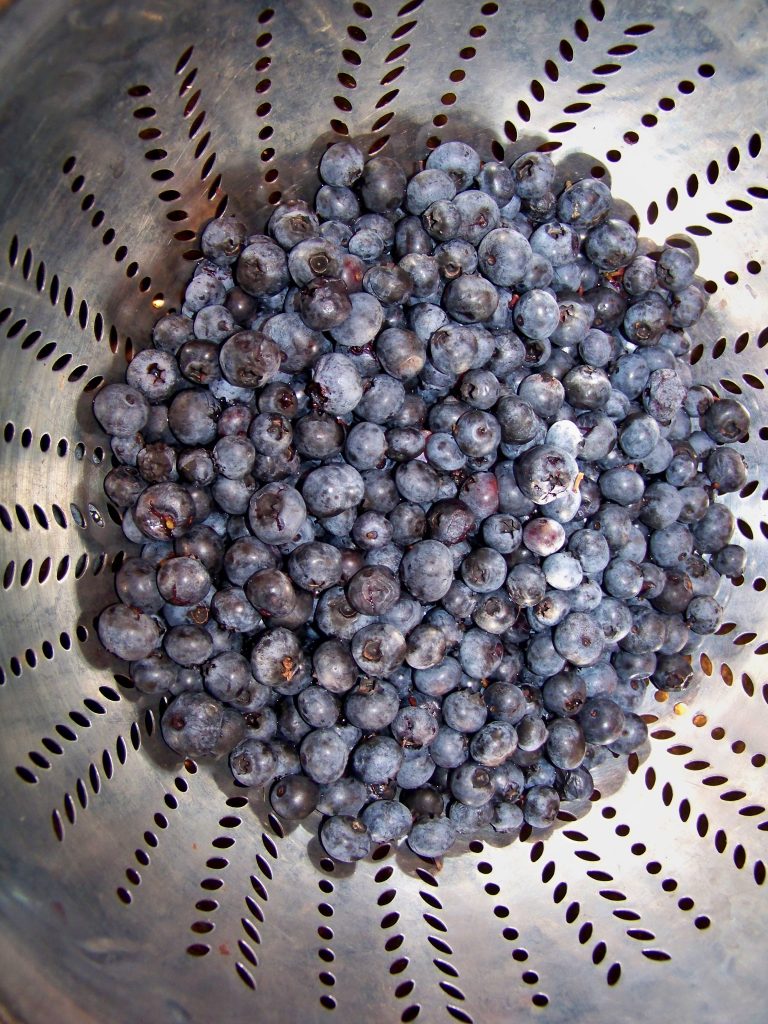
Summer Tomato Corn Salad

Hello friends!

One of the fun things about focusing on eating fresh fruits and vegetables is that your meals change with the seasons and what is available locally at any given time. In the summertime, the way I cook changes completely. In the winter I tend to make a lot of soups, stews, chili, crock pot meals and heavier pasta dishes. When we have an abundance of local goodness from the farm and our farmers market, I love to eat as fresh and close to the earth as possible.

I actually don’t know if you can really call most of what I do during the summer “cooking”. And this hardly even qualifies as a recipe. But its still one of our favorite summer dishes.

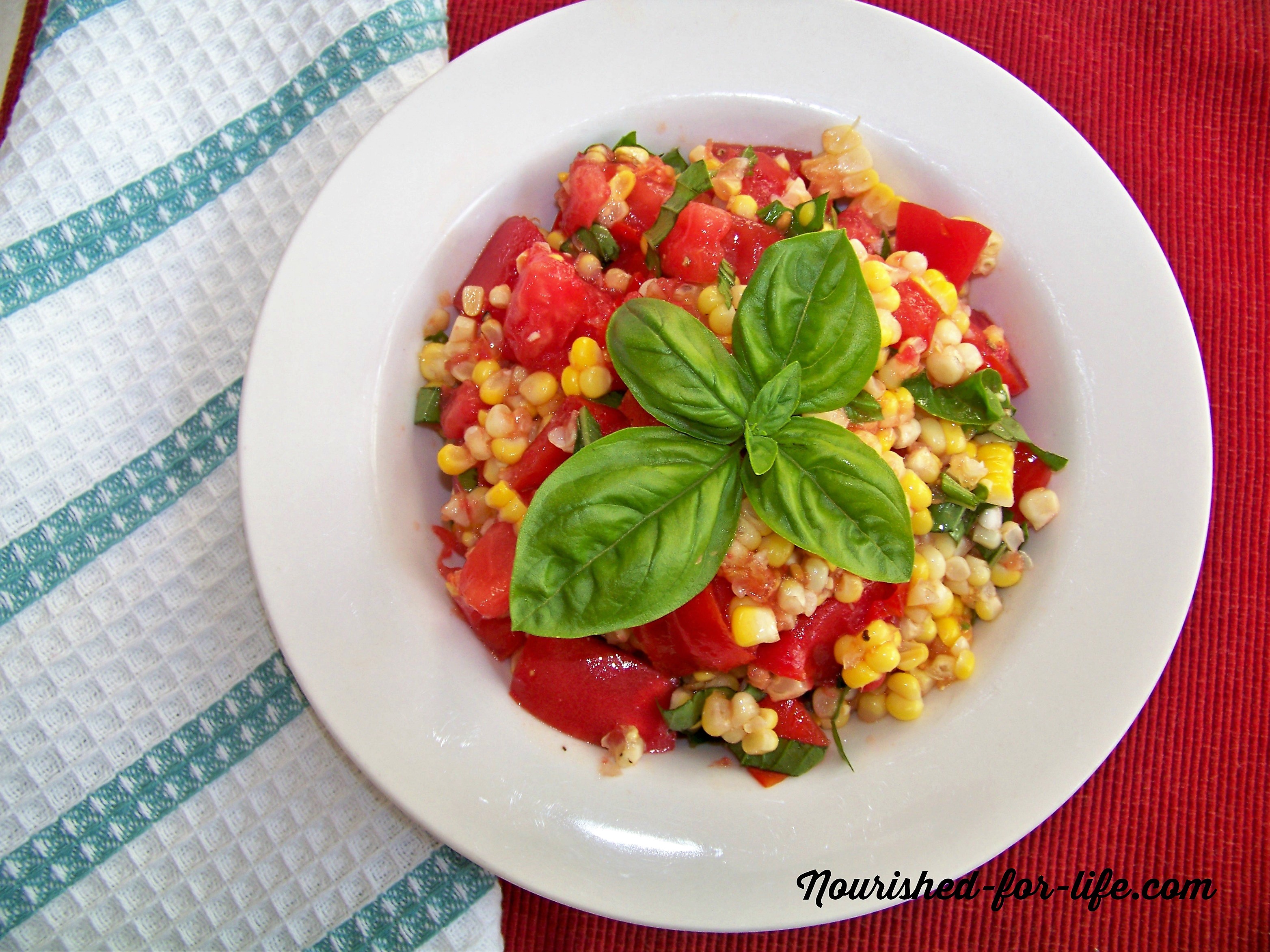
Summer Tomato Corn SaladWhen we make sweet corn, I always cook a few extra ears for this salad. If your corn is really fresh and tender, you don’t even have to cook it! I chop the freshest most delicious tomatoes we have (preferably a mix of sungolds, grape or cherry, and different colors of heirloom tomatoes) and then add the leftover corn (cut from the cob).

Drizzle with a good quality extra virgin olive oil, sprinkle with sea salt and pepper. and a generous handful of fresh basil. Summer heaven on a plate!

This salad is delicious on its own or as a side salad with an organic, pastured chicken breast.

Summer Tomato Corn Salad

Calories: 235kcal

Ingredients

  • 2-3 cobs sweet corn kernels removed (please use organic, non-GMO corn)
  • Aprrox. 1 lb fresh local summer tomatoes 3 medium tomatoes or a combination of sun gold, grape, cherry and heirlooms
  • Approx. 1/4 c. Fresh basil leaves thinly sliced
  • Extra virgin olive oil
  • Sea salt & pepper to taste

Instructions

  • Combine corn, tomatoes & basil in bowl. Add extra virgin olive oil, salt and pepper & toss gently to combine.
  • Enjoy immediately or store, refrigerated, up to 2 days.

Make sure to check out the Upcoming Events on my website and follow me on Facebook for all of the latest news!

Have a great week! Especially those of you heading back to school this week!!!

XOXO,

Kristi

PS:  If you’re heading back to school this week and need some lunch box inspiration, check out my blog post on Real Food School Lunches in Ten Minutes a Day!

The Skinny on Vegetable Oils & My Go-To Salad Dressings

I hear a lot of questions about salad dressing, and with good reason. Bottled salad dressings are typically filled with highly questionable or downright harmful ingredients like highly processed GMO oils, sugar or high fructose corn syrup, artificial flavors and chemical emulsifiers and preservatives.

I often dress my salad with a drizzle of flax or extra virgin olive oil and a squeeze of lemon juice or balsamic vinegar. You can find two of my favorite salads where I do just this here and here. For Mexican themed salads I love to use organic salsa or fresh homemade pico de gallo and guacamole in place of dressing.

But making your own dressing is quick and easy if you have a well stocked pantry and spice cabinet. Just follow a basic formula of 2-3 parts oil to one part acid (any variety of vinegar or citrus juice) and then experiment with adding herbs and spices to come up with your own favorites. (Technically, a vinaigrette is 3 parts fat, one part acid.) Save your old salad dressing bottles, spice or jam jars, or I like to use and re-use these very affordable salad dressing bottles from Amazon. There are other great options on Amazon as well.

Use minimally processed and health promoting oils like flax, coconut or extra virgin olive oil. Look for cold pressed or expeller pressed, organic oils.

Avoid processed “vegetable” oils including soybean, safflower, sunflower, cottonseed, peanut, canola and corn oil.

These grain or seed oils are highly processed processed and refined. Can you imagine the energy and effort it takes to extract oil out of a kernel of corn?! The oil is generally extracted from the seed or bean with high heat (which destroys any nutritional value and oxidizes the oil, turning it rancid and harmful to the human body) and toxic petroleum based solvents such as hexane, traces of which remain in the oil. Then the oil must be further chemically refined to eliminate undesirable smells, flavors and colors and make it palatable. Some of these oils go through an additional process called hydrogenation, to make them solid at room temperature and increase the shelf life. These hydrogenated oils (trans fats) are used in processed foods and sold as margarine or shortening.

Soybean, corn and canola oils are almost certainly from GMO crops (unless they are certified organic). These crops have been genetically modified to withstand exponentially higher quantities of the herbicide glyphosate (Roundup), which is an endocrine disrupter and “probable carcinogen”, according to the World Health Organization. Glyphosate kills everything except the genetically modified crop and then remains in our food.(1)(2)

We have been told by various adversory groups and the government’s own dietary recommendations to avoid saturated fats and replace them with polyunsaturated fats (PUFAs) instead. As a result, between 1909 and 2009, the consumption of PUFAs increased by 300%!(3) Soybean oil consumption alone has increased 1000-fold since 1900.(4) In 1999, at the turn of the millennium, soybean oil made up an astonishing 20% of calories consumed in the United States.(5) And this has turned out to be incredibly detrimental to our health.

In his book Eat Fat, Get Thin (which I highly recommend) Mark Hyman, MD, Director of the Cleveland Clinic Center for Functional Medicine, explains how this erroneous dietary advice occurred in the first place and details the studies that show diets high in PUFAs (in the form of hydrogenated oils/trans fats AND liquid vegetable oils) are among the leading causes in the epidemic of western diseases we now face including obesity, heart disease, diabetes & cancer.

One of the issues with the studies on which this dietary advice was based is that they didn’t differentiate between the two types of PUFAs–omega-6 fatty acids and omega-3 fatty acids. Omega-3 fatty acids fight inflammation and disease, while omega-6 fats fuel inflammatory pathways in the body.(6)

A healthful diet should include equal amounts of omega-6 and omega-3 essential fatty acids. The typical American diet now contains many, many more omega-6s than omega-3s. (7) Too many omega-6 oils in our diet promotes inflammation in our bodies(8)(9). Dr. Jospeh Hibbeln, a leading researcher at the National Institutes of Health, believes that the over-consumption of omega-6 fats and the underconsumption of omega-3 fats have led to increases in:

  • cardiovascular disease
  • Type 2 diabetes
  • obesity
  • metabolic syndrome (pre-diabetes)
  • irritable bowel syndrome and inflammatory bowel disease
  • macular degeneration (age-related blindness)
  • rheumatoid arthritis
  • asthma
  • cancer
  • psychiatric disorders and
  • autoimmune disease (10)

Most Americans cook with these oils at home, eat them in restaurants, and they are found in almost every packaged, processed food we buy. Even commercially raised meat is high in omega-6s. Wild game and grass fed or pastured animals are high in omega 3-s, because the animals are consuming mostly grass and green plants. But since the Industrial Revolution, commercial farmers have been feeding animals grains and seeds high in omega-6s and low in omega-3s, rather than the animals’ traditional diets. This means even the meat most of us eat is high in omega-6s and very low in omega-3s.(11)

You can reduce your consumption of inflammatory omega-6 oils by changing the fats you cook with at home, avoiding processed packaged foods, avoiding fast food and being careful what you choose in restaurants and switching to meat from grass fed or pastured animals. Making your own salad dressing with healthful oils is also a good start to regaining the right balance of omega-6 and omega-3 essential fatty acids.

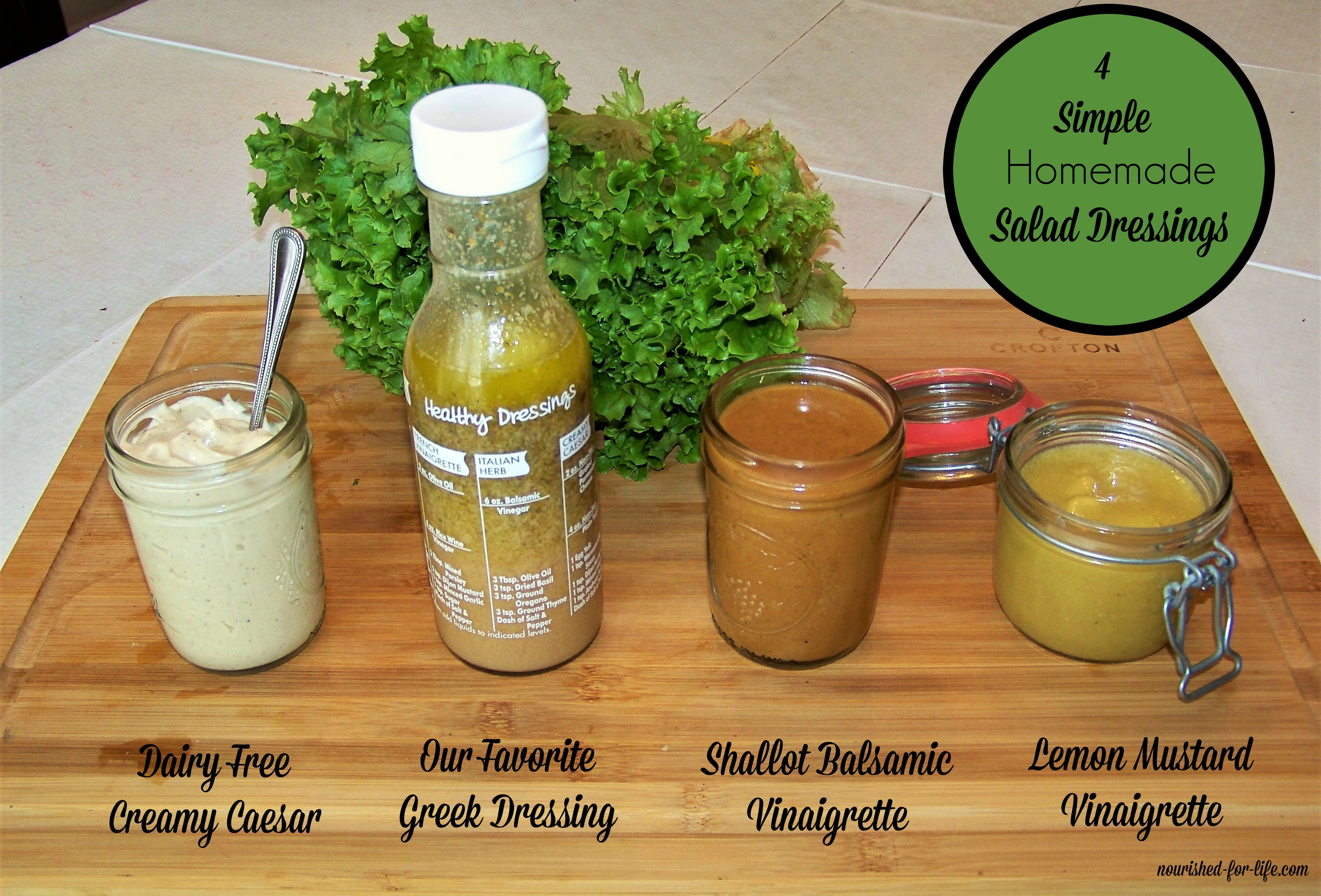
Making your own dressing is so easy and gives you endless flavor options with health promoting, real foods. Here are four of my go-to salad dressings, along with our favorite salad pairings. Try all of them and then experiment and come up with your own favorites!
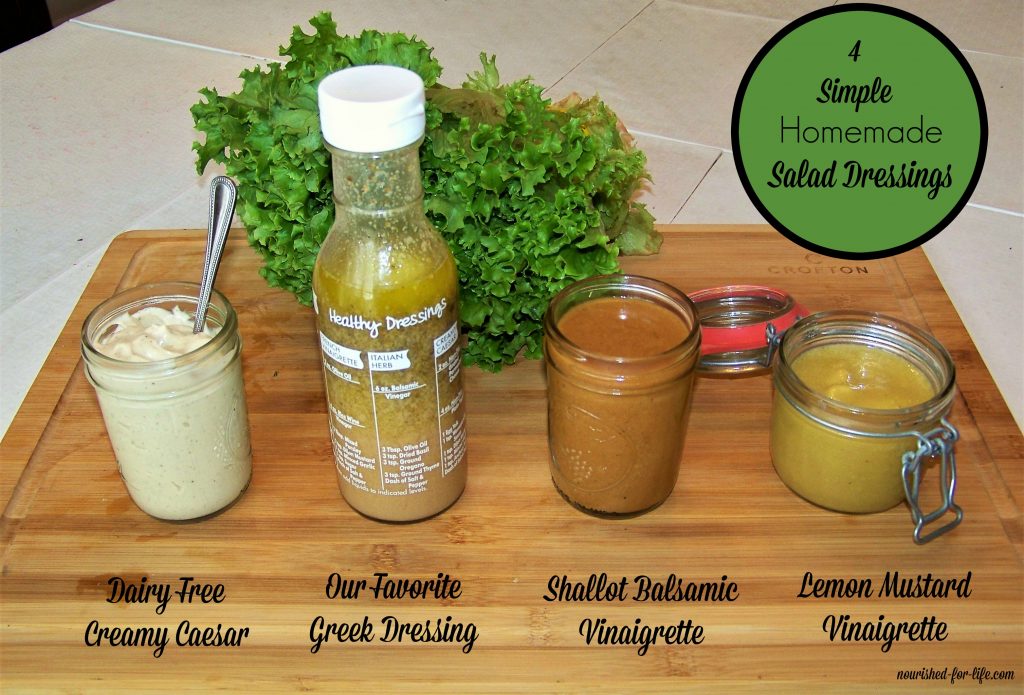
Salad Dressings

Greek Dressing

3/4 c. good quality extra virgin olive oil (I use California Olive Ranch)

1/2 c. Red wine vinegar (or Bragg’s apple cider vinegar)

2 tsp garlic powder

2 tsp onion powder

2 tsp dried oregano

1 tsp ground mustard seed

1 tsp black pepper

1 tsp good quality sea salt (I use Celtic sea salt or Redmond Real Salt)

Pour all ingredients into a glass jar or a 12 oz. dressing bottle and shake well. Refrigerate until ready to use.

Good quality extra virgin olive oil solidifies and turns cloudy in the refrigerator. This is one way you can tell whether your olive oil is pure and of good quality. In a study done a few years ago at UC Davis, the vast majority of EVOO tested was found to not actually be extra virgin or to be adulterated with lower quality processed oils. So when you’re paying for extra virgin olive oil for its health benefits, its good to confirm you actually have the good stuff! Just take it out of the refrigerator 15-20 minutes before you want to use it, or let the bottle sit in a bowl of warm water for a few minutes. Shake well and enjoy this dressing with green leaf, red leaf or romaine lettuce, topped with tomato, cucumber, red onion and black olives. Optionally add a bit of feta or goat cheese.

Lemon Mustard Vinaigrette

1/4 cup fresh lemon juice (juice from 1-2 lemons)

2 T Dijon mustard

Sea salt and pepper to taste

3/4 cup extra virgin olive oil

Place all ingredients in a small jar or dressing bottle with a lid and shake well. Alternatively, add the first three ingredients to your Vitamix, blend, and then drizzle in the olive oil with the blender running till you have a smooth creamy emulsification. We like this dressing on spinach, kale, bok choy or other dark leafy Asian greens such as pak choy, mizuna or yukina savoy. On each salad I like to add crumbled bacon (please only use nitrate-free bacon from clean, pastured animals), sliced hard boiled egg (or feta cheese) and a handful of walnuts, pecans or sunflower seeds. The tartness of the dressing and some added fat from the bacon, egg and nuts really cuts through these sometimes slightly tough or bitter greens.
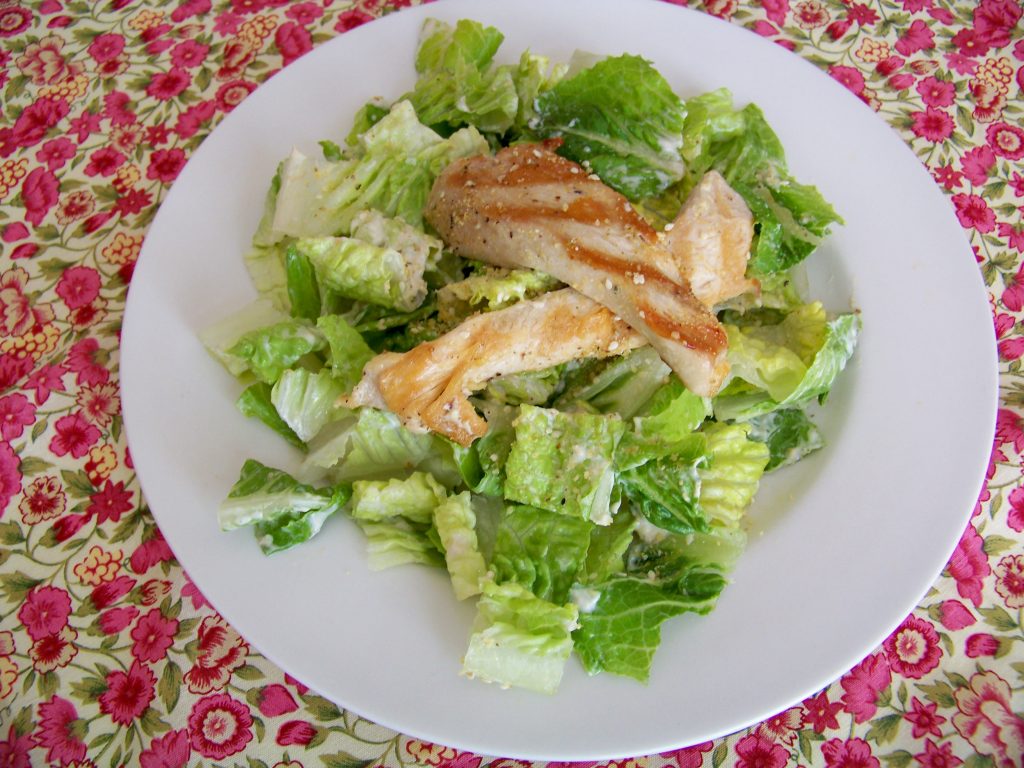
Caesar Salad

Dairy Free Creamy Caesar Dressing

*Adapted from Once Upon a Time: Recipes and Recollection from a Rover City (Jr. League of Evansville 2003)

3 cloves fresh garlic

3/4 c. mayonnaise (For the healthiest option, make you own mayo. If you use store bought, look for one with the fewest and best ingredients possible. We usually use Real Mayo which isn’t perfect but better than some other options.)

2 tsp. capers with brine

1/2 to 1 tsp. anchovy paste (we like the full tsp–the saltiness and umami from the anchovy makes up for the missing cheese in this recipe, but tailor this to your anchovy taste!)

1 T fresh lemon juice

1 tsp Worcestershire sauce

1 tsp. Dijon mustard

Sea salt and fresh ground black pepper to taste (I use Celtic Sea Salt or Redmond Real Salt)

Place all ingredients in your Vitamix or a good quality blender and blend until smooth. We love to toss this dressing with chopped romain and top it with grilled chicken for a gluten and dairy free Chicken Caesar Salad. Sometimes I make crutons from gluten free bread to make my kids happy, but its just as good without.

Shallot Balsamic Vinaigrette

1/4 c. balsamic vinegar

1/2 tsp sea salt

1/4 tsp fresh ground pepper

l shallot, cut in half or quarters

2 T raw honey

3/4 c. extra virgin olive oil

Place first 5 ingredients in your Vitamix and blend. With blender running, slowly add olive oil and keep blending until you have a smooth emulsification.

We enjoy this dressing on mixed greens with berries or dried fruit and nuts. I also like beets and an avocado with this dressing.  Optionally add some crumbled Gorgonzola or blue cheese.

In other news … 

Shred10

I am hosting two new Shred10 accountability groups starting Monday, March 6 and Monday, April 3. You do not have to be local to join in! This ten day program will help you jump start your health and includes help with meal planning and recipes, daily private coaching from me by text or phone and plenty of encouragement and accountability to help you achieve your health and wellness goals.

If you are ready to take the next step in your health journey, contact me for more information. Life is way too short not to be your healthiest and feel your best every single day!!   

Prime Time Health

Four Wednesday evenings in March, beginning this Wednesday, March 8, I’ll be teaching a workshop series called Prime Time Health. This workshop is a wealth of information for any adults or seniors who want to take charge of your own health and learn how to feel better, sleep better, have more energy, reduce inflammation and prevent disease. If you want to live longer and better, this series is for you!

Register here or contact me for more information.

Taste the Shred

On March 16, from 6 to 7 pm, we have an event at the Newburgh Central Library called Taste the Shred. Chef Adam Edwards will be cooking up several recipes from our Shred10 guidebook for you to taste. Join us to learn more about this health changing ten-day program and see for yourself how delicious healthy can be!

Register here or contact me for more information.

Spring is in the air, friends! Its a perfect time to get outside, breath deeply and get serious about changing your health and your future!

XOXO,

Kristi

PS.  Make sure to follow Nourished for Life on Facebook for all of the latest news and even more health and wellness related information!

Sources:

  1. https://www.ncbi.nlm.nih.gov/pubmed/19539684
  2. https://www.iarc.fr/en/media-centre/iarcnews/pdf/Q&A_Glyphosate.pdf
  3. TEDxHarvardLaw — Dr. Stephan Guyenet, The American Diet
  4. Mark Hyman, MD, Eat Fat, Get Thin (2016) at p. 80
  5. Hyman at p. 117
  6. Hyman at p. 77, 118
  7. http://www.sciencedirect.com/science/article/pii/S0753332206002435
  8. Hyman at 79
  9. https://www.ncbi.nlm.nih.gov/pubmed/19022225
  10. Hyman at 124-24, citing Hibbeln JR, Nieminen LR, Blasbalg TL, Riggs,JA, Lands WE. Healthy intakes of n-3 and n-6 fatty acids; estimations considering worldwide diversity. Am J Clin Nutrition. 2006 Jun:83(6 Suupl.); 1483S-93S.
  11. Hyman at p. 117

Heart Healthy Roasted Beet & Arugula Salad

I love to add a big dose of nutrition to my day by having a big green salad for lunch. We also have a green salad with our dinner nearly every single night. Usually its simple — lettuce or greens, maybe with some tomatoes. But sometimes I like to do something different and this salad is the perfect start to a special dinner. 

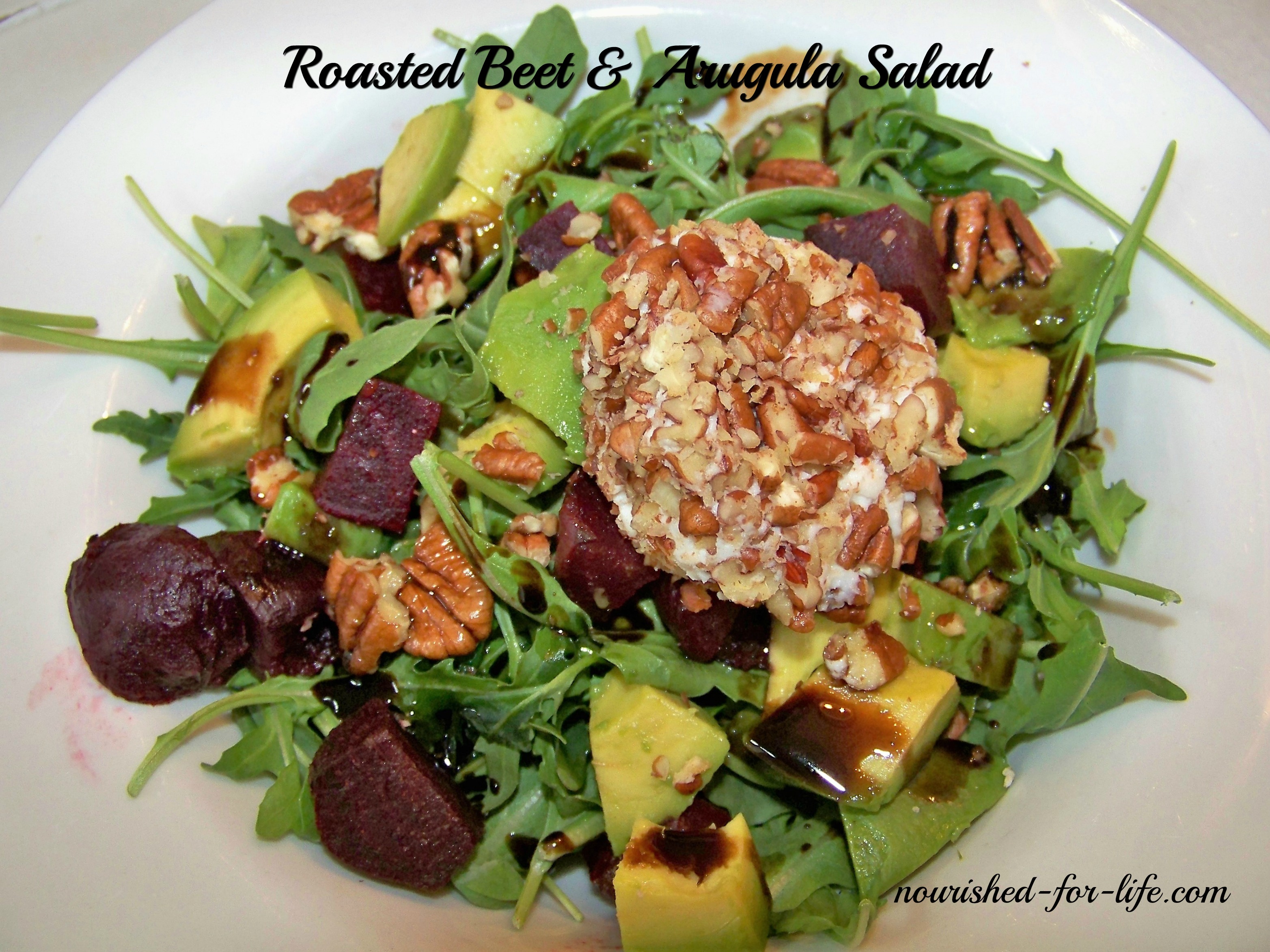
This is my copy cat version of Biaggi’s Honey Roasted Beet &.Arugula Salad, which is one of my favorite things to order there. (By the way, gluten free friends, Biaggi’s has a really good gluten free menu!) The avocado and goat cheese add just the right amount of healthy fats and creaminess to balance out the peppery arugula and the sweetness of the beets and crunch of the pecans rounds it out perfectly. And every single thing in it is so good for you!

Arugula

Arugula is a cruciferous vegetable in the same family as broccoli, Brussels sprouts and kale. Like all cruciferous vegetables, arugula is a nutritional powerhouse. Two cups of arugula  provides 20 percent of vitamin A, over 50 percent of vitamin K, and 8 percent of vitamin C, folate and calcium needs for the day. 

Along with other leafy greens (and beets!), arugula contains very high levels of naturally occurring nitrates (more than 250 milligrams/100 grams), which the body converts to nitric oxide. Nitric oxide is the natural blood pressure medication produced by the body’s own internal pharmacy when we eat right and exercise. Nitric oxid helps to relax and dilate your blood vessels which improves blood flow, muscle oxygenation and athletic performance and lowers blood pressure. 

Eating large amounts of cruciferous vegetables has long been associated with a lower risk of cancer, in part because they contain a sulfur-containing compound  called sulforaphane. These compounds give arugula its peppery bite and may also give it its cancer-fighting power. Researchers have found that sulforaphane can inhibit the enzyme histone deacetylase (HDAC), known to be involved in the progression of cancer cells. The ability to stop HDAC enzymes makes foods containing sulforaphane a powerful part of cancer prevention and could make them an important part of a holistic cancer treatment plan as well.  

Beets

Beets are high in fiber, vitamin C, folate and essential minerals like potassium (essential for healthy nerve and muscle function) and manganese (which is good for your bones, liver, kidneys, and pancreas). 

Like arugula, beets help improve circulation and lower blood pressure due to their naturally occurring nitrates. As discussed above, these nitrates are converted into nitric oxide–a natural vasodilator. 

Beets are also a good source of betaine, a nutrient that helps protects cells from environmental stress. It’s known to help fight inflammation, protect internal organs, improve risk factors for cardiovascular disease and enhance athletic performance.

According to Dr. Mercola, the powerful phytonutrients that give beets their deep color may also help to protect against cancer. Research has found that beetroot extract administered in drinking water reduced multi-organ tumor formations in various animal models. Beetroot extract is also being studied for use in treating human pancreatic, breast, and prostate cancer.

Roasting & peeling beets is easy. Just follow these instructions from thekitchn.com. Roast a bunch of beets at a time. They will keep in the refrigerator for a week, and you can use them for your salads for lunch or dinner throughout the week. Make sure you save your beet greens for another use. Beet greens and raw beets are also great additions to your morning green smoothie. 

Avocado

Avocados are one of my favorite foods. They are high in fiber and vitamins A, C,  K, B6, folate and choline. They have more potassium than a banana (!!) and also contain the minerals calcium, magnesium, phosphorus, copper, manganese and selenium. They are high in heart healthy monounsaturated fat, which actually promotes weight loss. Oleic acid, the main type of fatty acid in avocados, has been shown to reduce inflammation and have beneficial effects on genes linked to cancer. Adding healthy fats like avocado, pecans and extra virgin olive oil to a salad promotes satiety, and when you feel satisfied you’re less likely to overeat or reach for a junk food snack later. 

Just reading all of this makes me want to eat this salad every single day. Nourishing your body has never tasted so good!

Dress the salad with a drizzle of good quality Extra Virgin Olive Oil and a really good balsamic vinegar, if you have one. If you just have every day grocery store variety balsamic, that’s fine too. Make a simple balsamic reduction and keep it in the refrigerator to use all week and longer. It is delicious on salads or drizzled on roasted vegetables.

This salad is perfect for a satisfying and health promoting lunch, a light dinner or as a side or starter for a special occasion. I love it with gluten free Jovial spaghetti and Cousin Claudio’s Authentic Italian Pasta Sauce.

Blessings! 

Kristi 

Roasted Beet & Arugula Salad

Heart Healthy Beet & Arugula Salad

Enjoy this amazingly delicious and health promoting salad as satisfying lunch or light dinner or as a start to a special meal!
Servings: 2 MAIN COURSE SERVINGS OR 4 SIDE SALADS
Calories: 220kcal

Ingredients

  • 2-3 cups Arugula (or mixed greens if you prefer) (or 5 oz.)
  • 1 bunch (2-3) roasted beets (Heat oven to 400. Cut off leafy tops, scrub beats & wrap in foil. Place in oven on a baking sheet to catch juices. Roast 40-50 min or until tender when pricked with a fork. Let cool then peel off the skins and dice. I roast a bunch at a time and then keep them for salads and smoothes all week)
  • 1 Avocado, diced (Cut in half, remove pit, slice through the avocado in hatch marks/squares in the peel and then use a spoon to scoop it out)
  • 1 roll Goat cheese
  • 1/2 c Pecans, finely chopped
  • Extra virgin olive oil

Balsamic Reduction

Instructions

  • Divide arugula between 2 plates for a main course or 4 plates for a starter or side salad portion.
  • Cut avocados in half around the pit, remove the pit and slice through the flesh of the avocado with a sharp knif. Use a spoon to scoop the slices out and divide evenly between the salads.
  • Slice or dice 2 beets and divide them between the salads. Add pecans and crumbled goat cheese, if using. Optionally, slice a log of soft goat cheese into 1/2 in thick slices and roll each slice in finely chopped pecans, pressing to get the pecans to adhere to the cheese. Place one slice of cheese on each salad.
  • Top your arugula or salad greens with the beets, avocado, and goat cheese rounds. Add more pecans if you like.
  • To make the balsamic reduction, pour the balsamic vinegar to a small saucepan and add the honey or coconut sugar. Bring to a gentle boil and simmer for 10-15 minutes until the balsamic is reduced by 1/3 to 1/2. The reduction will thicken a bit as it cools.
  • Drizzle each salad with extra virgin olive oil and the balsamic reduction and enjoy!
  • Enjoy!
    This makes one large main course serving or 2 side salads. Of course, adjust quantities to your taste.  

Sources for nutritional information:

http://www.medicalnewstoday.com/articles/282769.php

http://articles.mercola.com/sites/articles/archive/2014/01/25/beets-health-benefits.aspx

https://authoritynutrition.com/12-proven-benefits-of-avocado/

Healthy School Lunches in Ten Minutes a Day

I recently read about a 2014 study that found home packed school lunches, as a whole, included more sugar, calories and unhealthy fats had lower nutritional value than school lunches. Wow! If this is true, we have some serious work to do, fellow lunch packing parents! I’ll admit packing school lunches is not my favorite activity. But it’s really important to me to feed my family foods that nourish their bodies and minds and we also have multiple food allergies, so its a necessity for us.
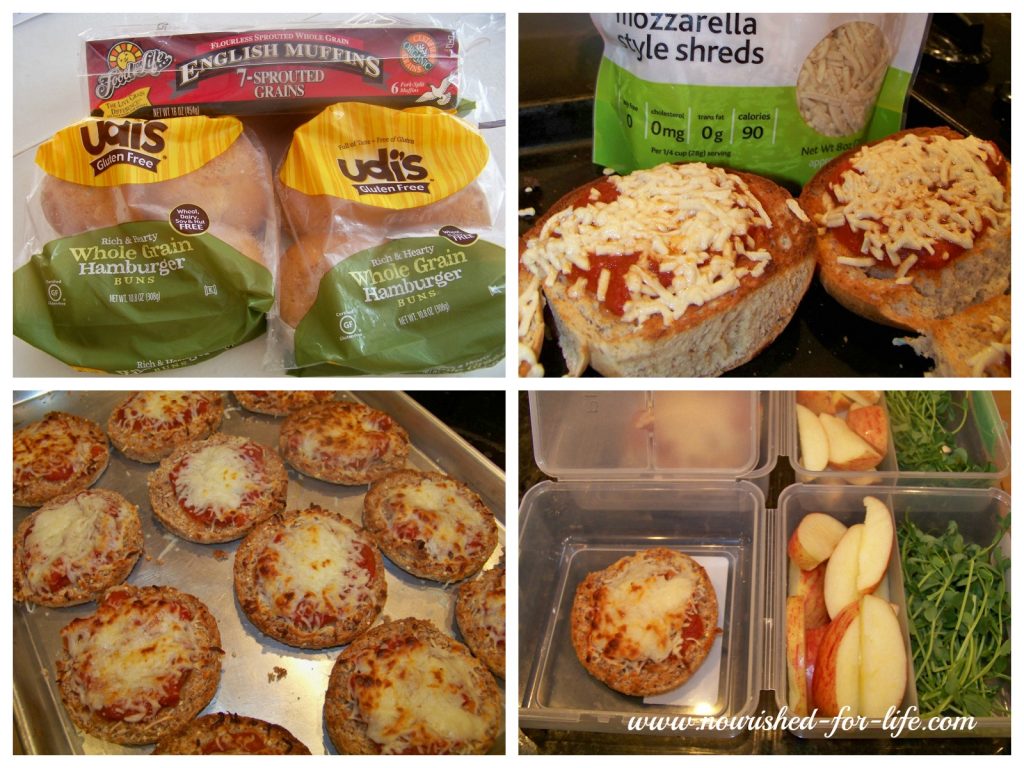
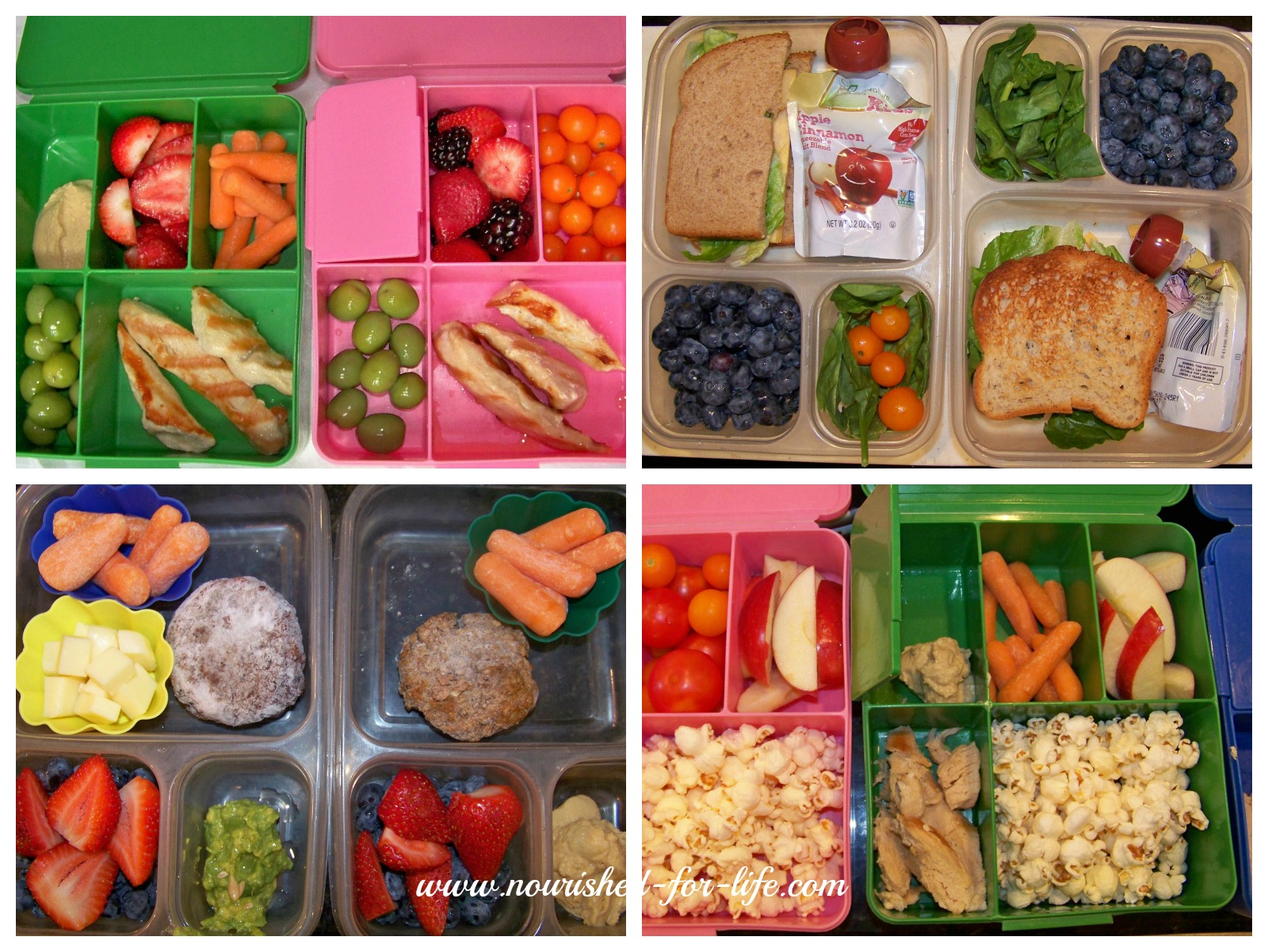
Our school lunches aren’t fancy, but they are filled with real whole foods that I feel good about feeding my kids. I’ve given you a quick reference list of the things on the rotation for my kids’ lunches. Read on below for my tips for getting this done quickly and easily. With a little planning ahead it really is possible to pack healthy, real food lunches in ten minutes a day!

I make most of our school lunches the night before. If I’m packing leftovers, I make lunches while I’m cleaning up from dinner so I only have to put food away once and I’m getting lunches packed at the same time. Then in the morning all I have to do is put the lunch containers in insulated lunch bags with a few ice packs. The biggest exception to this is soup–I heat it up and put it in thermoses in the morning while the kids are eating breakfast and it is still warm at lunch time.

I might have a bit of a problem with lunchbox containers. We have so many! But it helps keep the lunch packing process a bit more fun for me and I hope it keeps the kids from getting bored with their lunch options, too. We use the three compartment plastic EasyLunchBoxes and our Pottery Barn Kids bento boxes the most, but I also have several different Sistema containers. I really like their Lunch Cubes and Salad to Go containers and we use the Small Split for their morning snack.

Lunchbox collage

I generally follow the same basic formula: Main course (meat or another healthy protein/fat/whole grain), at least one fruit and at least one vegetable. Then I may add another side or two, depending on which lunch containers I’m using and whether I feel like they need more food.

I stock my freezer with things I can easily pull out and pop in a lunch container and they are thawed and ready to eat by lunchtime the next day.

  • When I make hamburgers, meatballs, or chicken for dinner I always make extra to freeze for lunches. I cut up chicken breasts into strips, grill them on a grill pan and freeze them for lunches. I always keep turkey meatballs and leftover hamburger patties in the freezer. My kids will happily eat any of these cold. I used to cut rounds of bread with a biscuit cutter and make cute little hamburger sliders with lettuce and cheese, but they prefer just the plain patty, which doesn’t seem quite as fun but I won’t complain because it makes my job easier. If possible, buy hormone and antibiotic free meat from grass fed/pastured animals. In addition to avoiding the hormones and antibiotics, pastured meat is much higher in omega-3 fatty acids and you get the benefit of the nutrition from all of the greens the animals eat. We buy our meat directly from Fischer Farms, a wonderful local family farm. I love knowing where my meat comes from and that it was raised humanely and healthfully.
  • Protein Muffins — I love to freeze these super healthy and delicious Grain Free Banana Protein Muffins from One Lovely Life for breakfasts and lunches. I make the recipe exactly as written except that I make 18 standard size muffins. These Flourless Chocolate Muffins were also on my list this week. Like the banana muffins, they are high in protein, have no flour, sugar or refined oils and they are so good.  You will never know they are made of chickpeas. My kids think they’re getting a chocolate cupcake in their lunches.
  • This week I also made and froze 24 Mini Pizzas. I use Food for Life sprouted grain hamburger buns or English muffins (for my gluten eaters) and for my gluten free kiddos either Food for Life gluten free English muffins or Udi’s whole grain gluten free hamburger buns. I lay the bun or muffin halves face up on a baking sheet and toast them in the oven, top with organic pasta sauce and cheese (or Diaya non-dairy cheese shreds for my dairy free kids), pop them back in the oven until the cheese melts, then let them cool and freeze them in a zip top bag. I’ll add a piece of fruit and a small salad or sprouts to their lunch and they will be set.

Healthy School Lunches

Other Main Courses — 

  1. Tacos — We have tacos for dinner several times a month and I always make extra so we can have tacos for lunches at least one day. I make 3 extra tacos before I clean up from dinner, put each one in a snack size zip top baggie so the toppings don’t fall out, and then put them in their lunch container with a piece of fruit and another side or two (sometimes a few organic blue corn chips and salsa or guacamole). The tacos are cold and I’m pretty sure the shells are soggy by lunch time but my kids still love them.
  2. Canned tuna — My daughter likes tuna plain straight from the can on a sandwich, on a salad or with whole grain crackers.
  3. Almond butter or sunbutter sandwiches are quick and easy.  Make sure you buy 100% pure, no sugar added Almond butter and use sprouted, whole grain or gluten free bread with the fewest and best ingredients possible.
  4. Lettuce and cheese sandwiches — I use Diaya cheddar style slices for my dairy free kiddos and put lettuce and cheese on sprouted wheat, whole grain or gluten free bread. My daughter likes a slice of tomato too. Once in a great while I give them BLTs.
  5. Chili or soup is good for variety in the fall and winter and makes a great, healthy lunch when paired with a real food muffin and a piece of fruit.
  6. Hard boiled eggs  — Make a dozen hard boiled eggs at a time and have enough for several days lunches. Buy local, organic or omega-3 eggs from pastured chickens, if possible.
  7. Organic yogurt — My preference is plain yogurt with just a bit of honey and some fruit or granola added, so I can control the amount of sugar.

Sides — Every lunch I pack has at least one vegetable and one fruit. I may add  a second fruit or one or two of the other options listed here:

  1. Veggies with hummus or guacamole for dipping— carrots, celery, bell peppers, broccoli, cauliflower, grape or cherry tomatoes, cucumber, or sugar snap peas, depending on which child and what they will eat.
  2. Lettuce or spinach salad — this is really just a few bites of salad, sometimes it gets eaten and sometimes it doesn’t!
  3. Pea, sunflower or radish sprouts — This is new for us this year. At our farmers market this summer we discovered Sprout Farms, a farmer who grows and sells micro greens and my kids love them! The amazing thing is that the sprouts really do taste just like the vegetable or seed they are grown from. The Pea Shoots really taste like peas and the Sunflower Shoots really taste like sunflower seeds. I’m thrilled to have another leafy green my crew will eat in their lunches. If you’re local, you can purchase them at the Downtown Evansville or Newburgh Farmer’s Markets or through their website. Or if you’re really ambitious you can grow sprouts in your own sprouting trays.
  4. Fresh Fruit — apple slices, berries, bananas, clementines and grapes are the most common lunchbox fruits for us
  5. Unsweetened applesauce — look for 100% applesauce with no added sugar (I’ve been known to pack apple slices and applesauce a few times when lunch supplies were very low.)
  6. Individual size fruit cups in 100% juice — I always have a few on hand for emergencies when we are out of fresh fruit
  7. Olives — My kiddos love olives and they are an easy and healthy fruit full of good healthy fats!  Our favorites are Castelvetrano Olives.
  8. Nuts and dates — I often fill one space in their bento boxes with nuts or a mix of dates and nuts for a healthy treat
  9. Cheese — buy organic where possible, local grass fed cheese is the best option if its available and fits your budget
  10. Protein muffins — see above for two of my favorites for my freezer stash
  11. Popcorn — a healthy whole grain treat as long as it isn’t popped in hydrogenated oils or loaded up with artificial flavoring
  12. Pretzels or whole grain or gluten free crackers — not really real food, but make it into my kids’ lunches once in a while
  13. Organic blue corn chips — also not really real food but I still use them once in a while on taco day

I hope this gives you some inspiration for your lunch boxes. It really is worth the effort to feed our kids real foods that nourish and heal their bodies and minds. I would love to hear if you have other real food lunch box ideas that your kids enjoy. Please share in the comments!

Summer Salad with Berries and Avocado

One of my favorite ways to get more fruits and vegetables into my diet is green smoothies. You can read about why I love green smoothies so much and get two of my favorite recipes here.

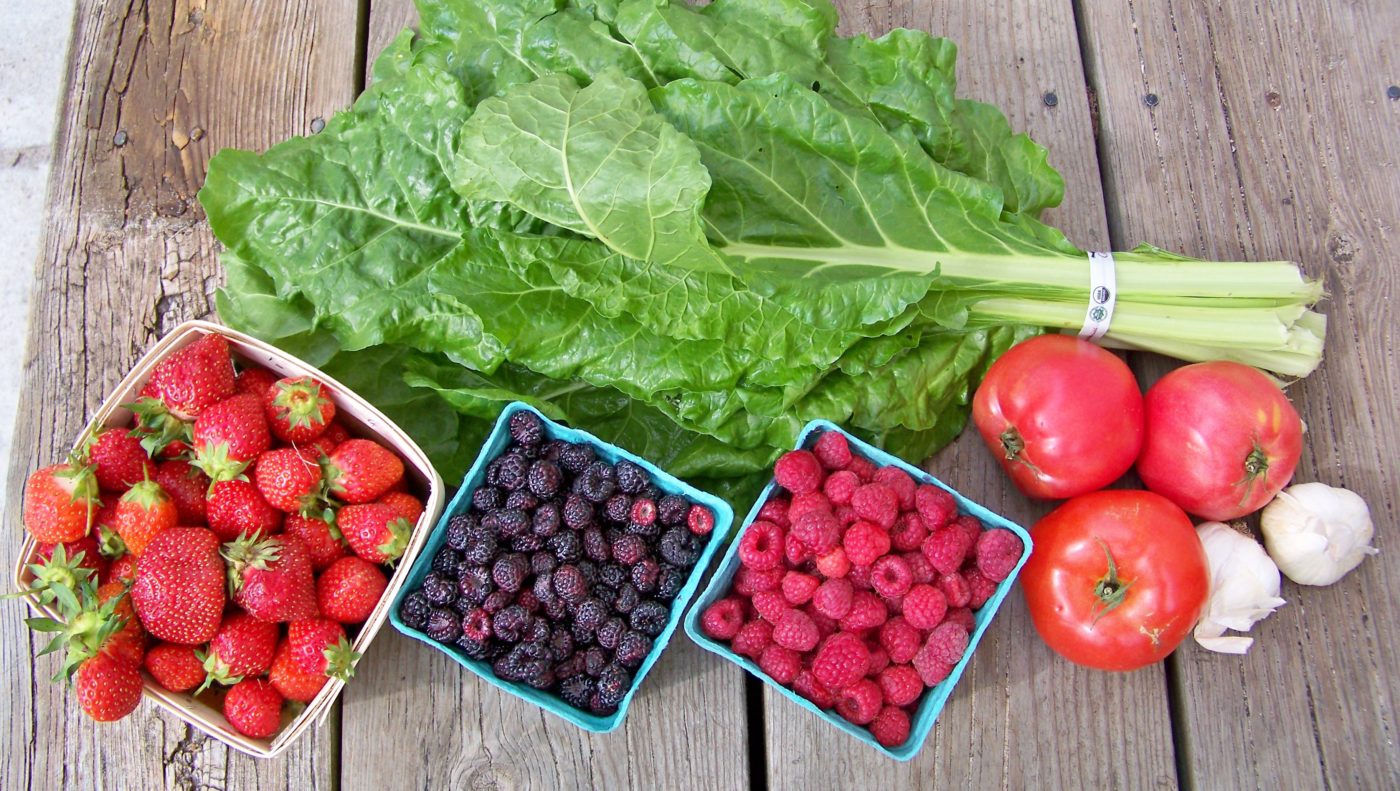
Another favorite way is to have a big green salad for lunch. My sister just did the Whole 30 plan a few months ago and she has been a good influence on my lunch habits. While we were on vacation earlier in the summer in St. Joseph, Michigan (a beautiful beach town on Lake Michigan with an amazing farmer’s market!) she got me back in the habit of having a big salad for lunch. It is such a great way to boost your nutrition for the day. My mom also often adds fruit to her salads. So I have been taking lessons from both of them and getting more creative with my salads. I just wish we had access to these beautiful farmer’s market berries all year long.

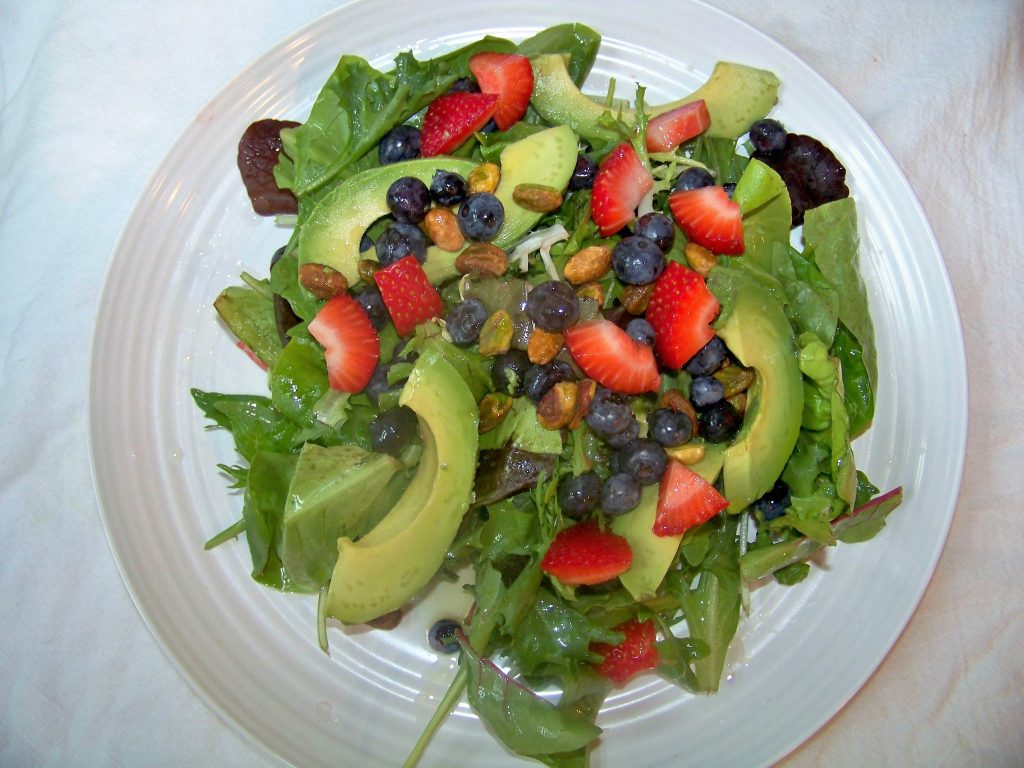
This is currently one of my favorite lunches. I even packed it for lunch on the beach several days. Mixed greens with fresh berries, avocado and pistachios for a little crunch. In place of dressing I just squeeze half a lemon over my salad and drizzle with a good quality extra virgin olive oil. Loaded with nutrition, satisfying and delicious–this salad keeps me feeling good all afternoon!

Berries and Avocado

This salad has 2 servings of vegetables and 2 servings of fruit and packs a huge nutritional punch. Blueberries, strawberries and blackberries are all low glycemic and among the most nutrient dense fruits you can eat, containing more antioxidants than almost any other fruit. Blueberries, specifically, are rich in proanthocyanidin, an important antioxidant that has been found to fight cancer, promote weight loss and give you healthy glowing skin. I used blueberries and strawberries this time, but blackberries are in season here right now and are delicious in this salad too.

Avocado is also often considered a super fruit because of its nutritional content (high in folate, Vitamin K, and potassium among other things) and because it is high in healthy, monounsaturated fat. The healthy fats from the avocado, olive oil and nuts increase the satiety factor and help keep you feeling full. In addition, salad greens such as romain, kale, chard and spinach are all great sources of carotenoids, and studies have found adding avocado to your salad increases the rate at which your cells absorb and utilize these important antioxidants by two to six times. And, of course, the addition of healthy fats also increases the bio-availability of fat-soluable vitamins A, D, E, and K.

Berries and Avocado

So enjoy this nutrient dense salad for lunch and you can feel good all day knowing you are giving your body a good dose of the nourishment it needs to fight inflammation, prevent disease and stay healthy!

But don’t worry  …

If you glaze over reading all of this nutritional information, I’m with you. I share it just to motivate you (and me), but the truth is you don’t need to remember one word of it. I don’t believe in counting calories or fat grams or even tracking RDAs of specific nutrients, unless you need to address a specific health concern. If you want to skip to the bottom line, all you really need to know (to paraphrase Michael Pollan) is:

Eat real whole foods. Mostly vegetables, fruits and healthy fats.

Skip the sugar and processed junk.

And watch your health soar.

Summer Salad with Berries and Avocado

Ingredients

  • 5 oz approx. 4 cups fresh mixed salad greens*
  • 1 cup fresh berries* I used blueberries and strawberries here but blackberries are in season right now and I love them too!
  • 1/2 of an avocado cut in thin slices
  • 1/4 cup pistachios

Dressing

  • 1/2 lemon
  • Approx. 2 T
  • Extra virgin olive oil

Instructions

  • Please use organic greens and berries, where possible.
  • Spread salad on a dinner plate and top with berries.
  • Make sure your avocado is ripe. It should feel soft when you squeeze it. Cut it in half, slicing around the seed, and twist the halves apart. Use the side without the seed. With the avocado still in the peel,slice through the flesh lengthwise with a knife, then use a spoon to scoop it out of the peel. Make sure you get all of the green parts and leave only the peel, as most of the nutrients are in the darkest green parts of the avocado closest to the peel. Spread the slices on your salad. Leave the seed in the other half. Rub the flesh with a bit of lemon juice, wrap it and keep it in the refrigerator for another meal.
  • Sprinkle with pistachios or the nut of your choice. Walnuts are great here too.
  • Drizzle with the juice of 1/2 a lemon (I squeeze mine right over the salad) and drizzle with extra virgin olive oil.
  • Enjoy and feel good knowing you've given yourself a great dose of the nourishment your body needs to feel great and stay healthy!

Sources for nutritional information:

World’s Healthiest Foods — www.whfoods.com

Self Nutrition Data — www.nutritiondata.self.com

Tuscan White Bean and Tuna Salad

Twelve years ago my husband and I got married in an 800 year old church overlooking the Adriatic, in a tiny hilltop town in Italy. The same church his great-grandparents were married in before they emigrated to the US. After a beautiful wedding day, we spent a week near Lucca, in Tuscany. Nearly every evening we ate dinner at a little wood fired pizza shop just down the mountain from our cottage. We still reminisce about our favorite “rucola e prosciutto” pizza, the simple fresh salads and the kind owner/pizza chef who came out from the kitchen every night to check on us and bring us gifts of biscotti, espresso and Lemoncello.

image

This was the beginning of my love affair with food. Italians are experts at taking the highest quality, fresh, healthy ingredients and preparing them with love and a simplicity that lets their natural flavors shine. The results are incredible in both their simplicity and deliciousness. (In my world, food must be healthy AND delicious!)

The closest we have come to repeating this authentic Italian experience here in the US is at our favorite Italian trattoria and pizzeria in Pittsburgh, PA called Il Piccolo Forno. This Tuscan White Bean and Tuna Salad was my attempt to recreate the flavors of an amazing salad we enjoyed there. A perfect combination of simple, fresh, healthy ingredients that made up a perfect summer salad.

image

This salad is delicious served on its own as a healthy lunch or a light dinner. Two of my four littles prefer it plain as pictured above or with some whole grain crackers. Nick has been known to turn it into a sandwich. But we really love it on a bed of mixed greens. Drizzle with a bit more extra virgin olive oil and an authentic, high quality balsamic vinegar and sprinkle with a few shaves of parmigiano reggiano and you’ll feel like you’re sitting at a trattoria in Tuscany.

Tuscan White Bean and Tuna Salad

Ingredients

  • 3 c. cooked Cannellini or Great Northern beans or 2 15.5 oz cans, drained and rinsed
  • 2 cans tuna fish (I like
  • Genova yellowfin tuna in olive oil
  • )
  • 1 shallot minced
  • 1/2 c. Flat leaf Italian parsley chopped
  • 1/3 c. Extra virgin olive oil (I use
  • California Olive Ranch
  • )
  • 1/4 c. Red wine vinegar
  • Mixed greens balsamic vinegar and parmigiano reggiano, optional for serving

Instructions

  • In a bowl, combine beans, tuna, shallot and parsley. Add olive oil and red wine vinegar and stir to combine. Ideally, if you can wait, let the salad sit in the refrigerator for a few hours or overnight to allow the flavors to meld.
    Serve alone or over a bed of mixed greens and drizzle with a high quality balsamic vinegar and shaved parmigiano reggiano.