Delicious Dairy Free Pesto

Pesto might be one of my favorite summer foods. In Liguria, Italy, the home of pesto, it is made with basil Genovese and often served with a small, dense, twisted pasta also native to Liguria called trofie. Traditionally in Pasta al Trofie, blanched red potatoes and green beans are tossed with the trofie and pesto.

Sadly, I haven’t found anyone who makes gluten free trofie, but I do so love fresh pesto! Right now while my patio pots are overflowing with fresh herbs and we have an abundance of green beans from the farm, I’m really loving making this recipe and using about a third of it as the topping for my Garlic & Herb Wild Salmon, about one third stirred into green beans prepared per these instructions from thekitchn.com and the final third we spoon over a side dish of rice. The perfect light summery dinner.

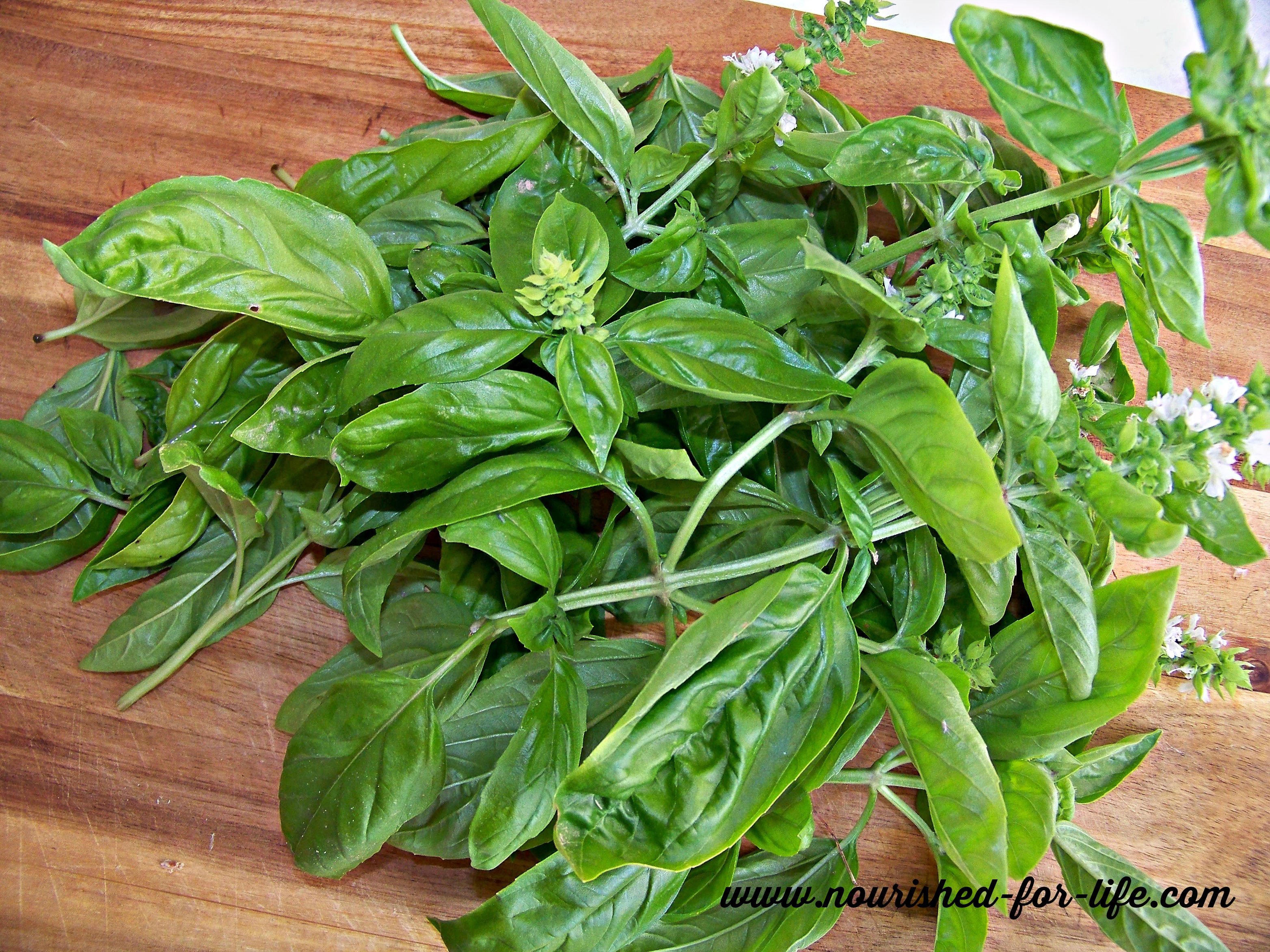
While it’s not traditional, I like to use half basil and half parsley in my pesto and I substitute walnuts for the traditional pine nuts, both for cost & availability reasons and because walnuts have so many health benefits! I increase the amount of nuts and add an extra pinch of sea salt to make up for the missing cheese, which YOU won’t miss at all, I promise.

Buon appetito!

Delicious Dairy Free Pesto

Ingredients

  • 1 cup fresh basil leaves tightly packed
  • 1 cup fresh flat leaf Italian parsley leaves
  • 2 cloves fresh garlic
  • 1/2 tsp sea salt plus more to taste
  • 1/4 tsp fresh ground black pepper plus more to taste
  • 1/2 cup toasted walnuts
  • About 2/3 cup good quality extra virgin olive oil

Instructions

  • Place first 6 ingredients (everything but olive oil) into food processor and pulse until finely chopped. With the food processor still running, gradually pour in the olive oil, until the pesto reaches a smooth and thick consistency. Taste and season with additional sea salt and pepper, as needed.
    Serve over pasta, vegetables, rice or anything your heart desires!

The Skinny on Vegetable Oils & My Go-To Salad Dressings

I hear a lot of questions about salad dressing, and with good reason. Bottled salad dressings are typically filled with highly questionable or downright harmful ingredients like highly processed GMO oils, sugar or high fructose corn syrup, artificial flavors and chemical emulsifiers and preservatives.

I often dress my salad with a drizzle of flax or extra virgin olive oil and a squeeze of lemon juice or balsamic vinegar. You can find two of my favorite salads where I do just this here and here. For Mexican themed salads I love to use organic salsa or fresh homemade pico de gallo and guacamole in place of dressing.

But making your own dressing is quick and easy if you have a well stocked pantry and spice cabinet. Just follow a basic formula of 2-3 parts oil to one part acid (any variety of vinegar or citrus juice) and then experiment with adding herbs and spices to come up with your own favorites. (Technically, a vinaigrette is 3 parts fat, one part acid.) Save your old salad dressing bottles, spice or jam jars, or I like to use and re-use these very affordable salad dressing bottles from Amazon. There are other great options on Amazon as well.

Use minimally processed and health promoting oils like flax, coconut or extra virgin olive oil. Look for cold pressed or expeller pressed, organic oils.

Avoid processed “vegetable” oils including soybean, safflower, sunflower, cottonseed, peanut, canola and corn oil.

These grain or seed oils are highly processed processed and refined. Can you imagine the energy and effort it takes to extract oil out of a kernel of corn?! The oil is generally extracted from the seed or bean with high heat (which destroys any nutritional value and oxidizes the oil, turning it rancid and harmful to the human body) and toxic petroleum based solvents such as hexane, traces of which remain in the oil. Then the oil must be further chemically refined to eliminate undesirable smells, flavors and colors and make it palatable. Some of these oils go through an additional process called hydrogenation, to make them solid at room temperature and increase the shelf life. These hydrogenated oils (trans fats) are used in processed foods and sold as margarine or shortening.

Soybean, corn and canola oils are almost certainly from GMO crops (unless they are certified organic). These crops have been genetically modified to withstand exponentially higher quantities of the herbicide glyphosate (Roundup), which is an endocrine disrupter and “probable carcinogen”, according to the World Health Organization. Glyphosate kills everything except the genetically modified crop and then remains in our food.(1)(2)

We have been told by various adversory groups and the government’s own dietary recommendations to avoid saturated fats and replace them with polyunsaturated fats (PUFAs) instead. As a result, between 1909 and 2009, the consumption of PUFAs increased by 300%!(3) Soybean oil consumption alone has increased 1000-fold since 1900.(4) In 1999, at the turn of the millennium, soybean oil made up an astonishing 20% of calories consumed in the United States.(5) And this has turned out to be incredibly detrimental to our health.

In his book Eat Fat, Get Thin (which I highly recommend) Mark Hyman, MD, Director of the Cleveland Clinic Center for Functional Medicine, explains how this erroneous dietary advice occurred in the first place and details the studies that show diets high in PUFAs (in the form of hydrogenated oils/trans fats AND liquid vegetable oils) are among the leading causes in the epidemic of western diseases we now face including obesity, heart disease, diabetes & cancer.

One of the issues with the studies on which this dietary advice was based is that they didn’t differentiate between the two types of PUFAs–omega-6 fatty acids and omega-3 fatty acids. Omega-3 fatty acids fight inflammation and disease, while omega-6 fats fuel inflammatory pathways in the body.(6)

A healthful diet should include equal amounts of omega-6 and omega-3 essential fatty acids. The typical American diet now contains many, many more omega-6s than omega-3s. (7) Too many omega-6 oils in our diet promotes inflammation in our bodies(8)(9). Dr. Jospeh Hibbeln, a leading researcher at the National Institutes of Health, believes that the over-consumption of omega-6 fats and the underconsumption of omega-3 fats have led to increases in:

  • cardiovascular disease
  • Type 2 diabetes
  • obesity
  • metabolic syndrome (pre-diabetes)
  • irritable bowel syndrome and inflammatory bowel disease
  • macular degeneration (age-related blindness)
  • rheumatoid arthritis
  • asthma
  • cancer
  • psychiatric disorders and
  • autoimmune disease (10)

Most Americans cook with these oils at home, eat them in restaurants, and they are found in almost every packaged, processed food we buy. Even commercially raised meat is high in omega-6s. Wild game and grass fed or pastured animals are high in omega 3-s, because the animals are consuming mostly grass and green plants. But since the Industrial Revolution, commercial farmers have been feeding animals grains and seeds high in omega-6s and low in omega-3s, rather than the animals’ traditional diets. This means even the meat most of us eat is high in omega-6s and very low in omega-3s.(11)

You can reduce your consumption of inflammatory omega-6 oils by changing the fats you cook with at home, avoiding processed packaged foods, avoiding fast food and being careful what you choose in restaurants and switching to meat from grass fed or pastured animals. Making your own salad dressing with healthful oils is also a good start to regaining the right balance of omega-6 and omega-3 essential fatty acids.

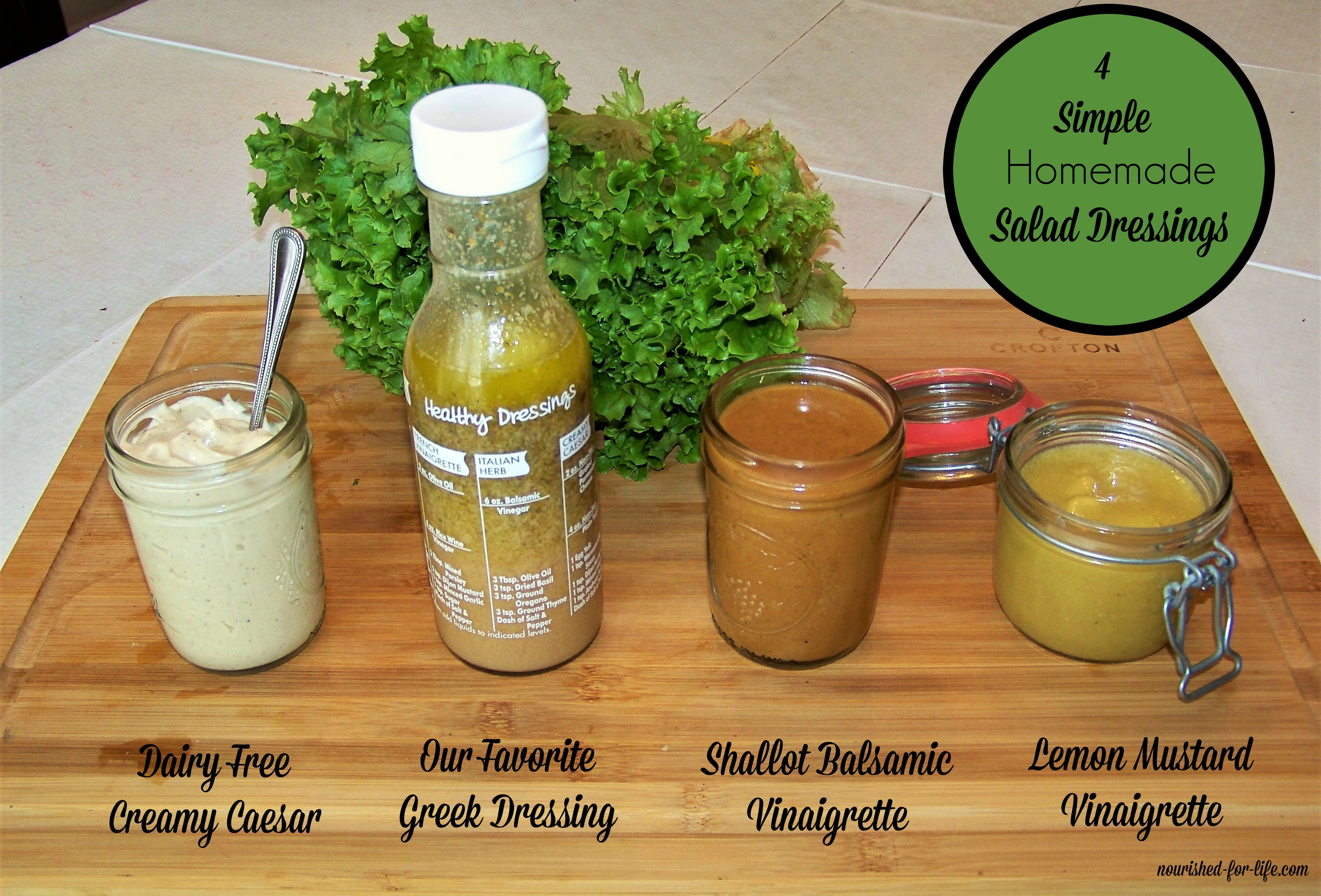
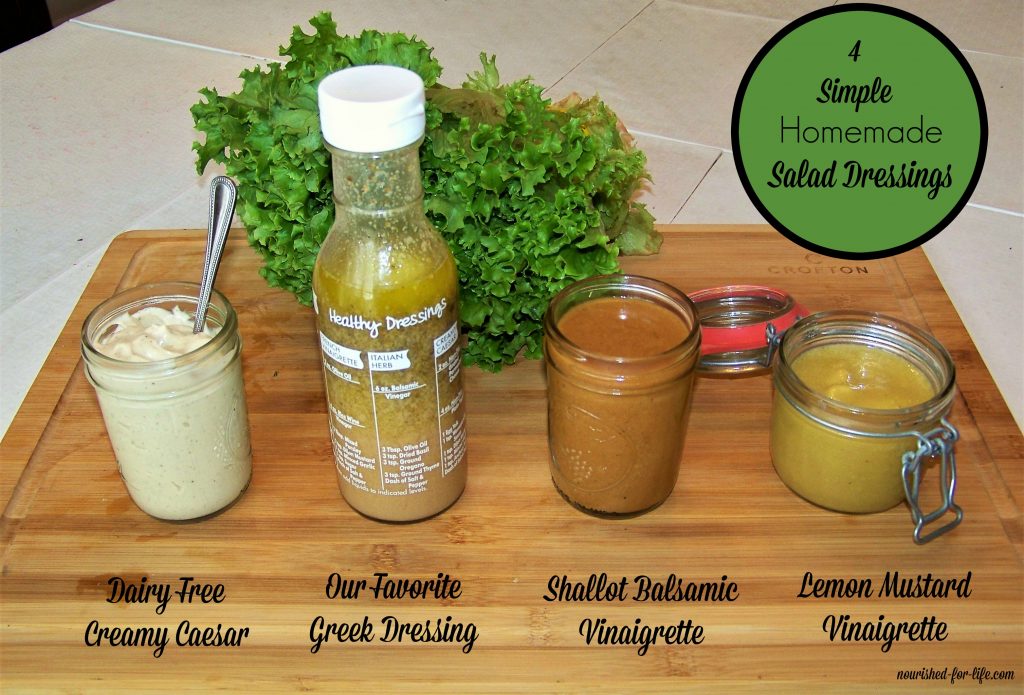
Making your own dressing is so easy and gives you endless flavor options with health promoting, real foods. Here are four of my go-to salad dressings, along with our favorite salad pairings. Try all of them and then experiment and come up with your own favorites!
Salad Dressings

Greek Dressing

3/4 c. good quality extra virgin olive oil (I use California Olive Ranch)

1/2 c. Red wine vinegar (or Bragg’s apple cider vinegar)

2 tsp garlic powder

2 tsp onion powder

2 tsp dried oregano

1 tsp ground mustard seed

1 tsp black pepper

1 tsp good quality sea salt (I use Celtic sea salt or Redmond Real Salt)

Pour all ingredients into a glass jar or a 12 oz. dressing bottle and shake well. Refrigerate until ready to use.

Good quality extra virgin olive oil solidifies and turns cloudy in the refrigerator. This is one way you can tell whether your olive oil is pure and of good quality. In a study done a few years ago at UC Davis, the vast majority of EVOO tested was found to not actually be extra virgin or to be adulterated with lower quality processed oils. So when you’re paying for extra virgin olive oil for its health benefits, its good to confirm you actually have the good stuff! Just take it out of the refrigerator 15-20 minutes before you want to use it, or let the bottle sit in a bowl of warm water for a few minutes. Shake well and enjoy this dressing with green leaf, red leaf or romaine lettuce, topped with tomato, cucumber, red onion and black olives. Optionally add a bit of feta or goat cheese.

Lemon Mustard Vinaigrette

1/4 cup fresh lemon juice (juice from 1-2 lemons)

2 T Dijon mustard

Sea salt and pepper to taste

3/4 cup extra virgin olive oil

Place all ingredients in a small jar or dressing bottle with a lid and shake well. Alternatively, add the first three ingredients to your Vitamix, blend, and then drizzle in the olive oil with the blender running till you have a smooth creamy emulsification. We like this dressing on spinach, kale, bok choy or other dark leafy Asian greens such as pak choy, mizuna or yukina savoy. On each salad I like to add crumbled bacon (please only use nitrate-free bacon from clean, pastured animals), sliced hard boiled egg (or feta cheese) and a handful of walnuts, pecans or sunflower seeds. The tartness of the dressing and some added fat from the bacon, egg and nuts really cuts through these sometimes slightly tough or bitter greens.
Caesar Salad

Dairy Free Creamy Caesar Dressing

*Adapted from Once Upon a Time: Recipes and Recollection from a Rover City (Jr. League of Evansville 2003)

3 cloves fresh garlic

3/4 c. mayonnaise (For the healthiest option, make you own mayo. If you use store bought, look for one with the fewest and best ingredients possible. We usually use Real Mayo which isn’t perfect but better than some other options.)

2 tsp. capers with brine

1/2 to 1 tsp. anchovy paste (we like the full tsp–the saltiness and umami from the anchovy makes up for the missing cheese in this recipe, but tailor this to your anchovy taste!)

1 T fresh lemon juice

1 tsp Worcestershire sauce

1 tsp. Dijon mustard

Sea salt and fresh ground black pepper to taste (I use Celtic Sea Salt or Redmond Real Salt)

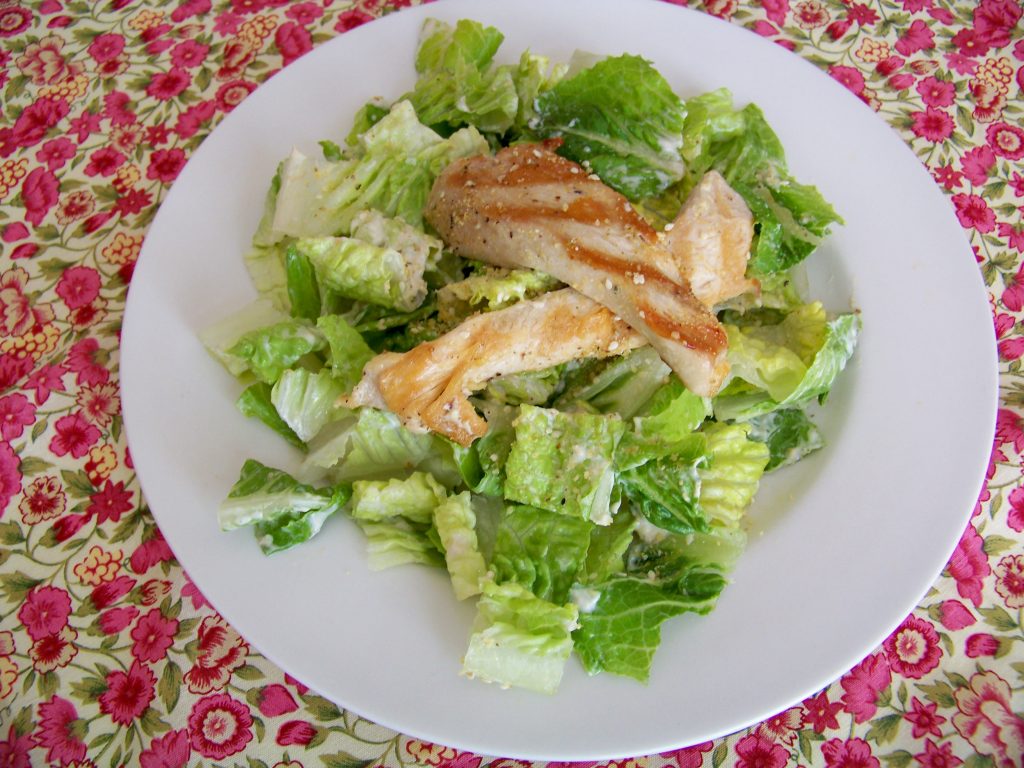
Place all ingredients in your Vitamix or a good quality blender and blend until smooth. We love to toss this dressing with chopped romain and top it with grilled chicken for a gluten and dairy free Chicken Caesar Salad. Sometimes I make crutons from gluten free bread to make my kids happy, but its just as good without.

Shallot Balsamic Vinaigrette

1/4 c. balsamic vinegar

1/2 tsp sea salt

1/4 tsp fresh ground pepper

l shallot, cut in half or quarters

2 T raw honey

3/4 c. extra virgin olive oil

Place first 5 ingredients in your Vitamix and blend. With blender running, slowly add olive oil and keep blending until you have a smooth emulsification.

We enjoy this dressing on mixed greens with berries or dried fruit and nuts. I also like beets and an avocado with this dressing.  Optionally add some crumbled Gorgonzola or blue cheese.

In other news … 

Shred10

I am hosting two new Shred10 accountability groups starting Monday, March 6 and Monday, April 3. You do not have to be local to join in! This ten day program will help you jump start your health and includes help with meal planning and recipes, daily private coaching from me by text or phone and plenty of encouragement and accountability to help you achieve your health and wellness goals.

If you are ready to take the next step in your health journey, contact me for more information. Life is way too short not to be your healthiest and feel your best every single day!!   

Prime Time Health

Four Wednesday evenings in March, beginning this Wednesday, March 8, I’ll be teaching a workshop series called Prime Time Health. This workshop is a wealth of information for any adults or seniors who want to take charge of your own health and learn how to feel better, sleep better, have more energy, reduce inflammation and prevent disease. If you want to live longer and better, this series is for you!

Register here or contact me for more information.

Taste the Shred

On March 16, from 6 to 7 pm, we have an event at the Newburgh Central Library called Taste the Shred. Chef Adam Edwards will be cooking up several recipes from our Shred10 guidebook for you to taste. Join us to learn more about this health changing ten-day program and see for yourself how delicious healthy can be!

Register here or contact me for more information.

Spring is in the air, friends! Its a perfect time to get outside, breath deeply and get serious about changing your health and your future!

XOXO,

Kristi

PS.  Make sure to follow Nourished for Life on Facebook for all of the latest news and even more health and wellness related information!

Sources:

  1. https://www.ncbi.nlm.nih.gov/pubmed/19539684
  2. https://www.iarc.fr/en/media-centre/iarcnews/pdf/Q&A_Glyphosate.pdf
  3. TEDxHarvardLaw — Dr. Stephan Guyenet, The American Diet
  4. Mark Hyman, MD, Eat Fat, Get Thin (2016) at p. 80
  5. Hyman at p. 117
  6. Hyman at p. 77, 118
  7. http://www.sciencedirect.com/science/article/pii/S0753332206002435
  8. Hyman at 79
  9. https://www.ncbi.nlm.nih.gov/pubmed/19022225
  10. Hyman at 124-24, citing Hibbeln JR, Nieminen LR, Blasbalg TL, Riggs,JA, Lands WE. Healthy intakes of n-3 and n-6 fatty acids; estimations considering worldwide diversity. Am J Clin Nutrition. 2006 Jun:83(6 Suupl.); 1483S-93S.
  11. Hyman at p. 117

Eggplant Lasagna Stacks

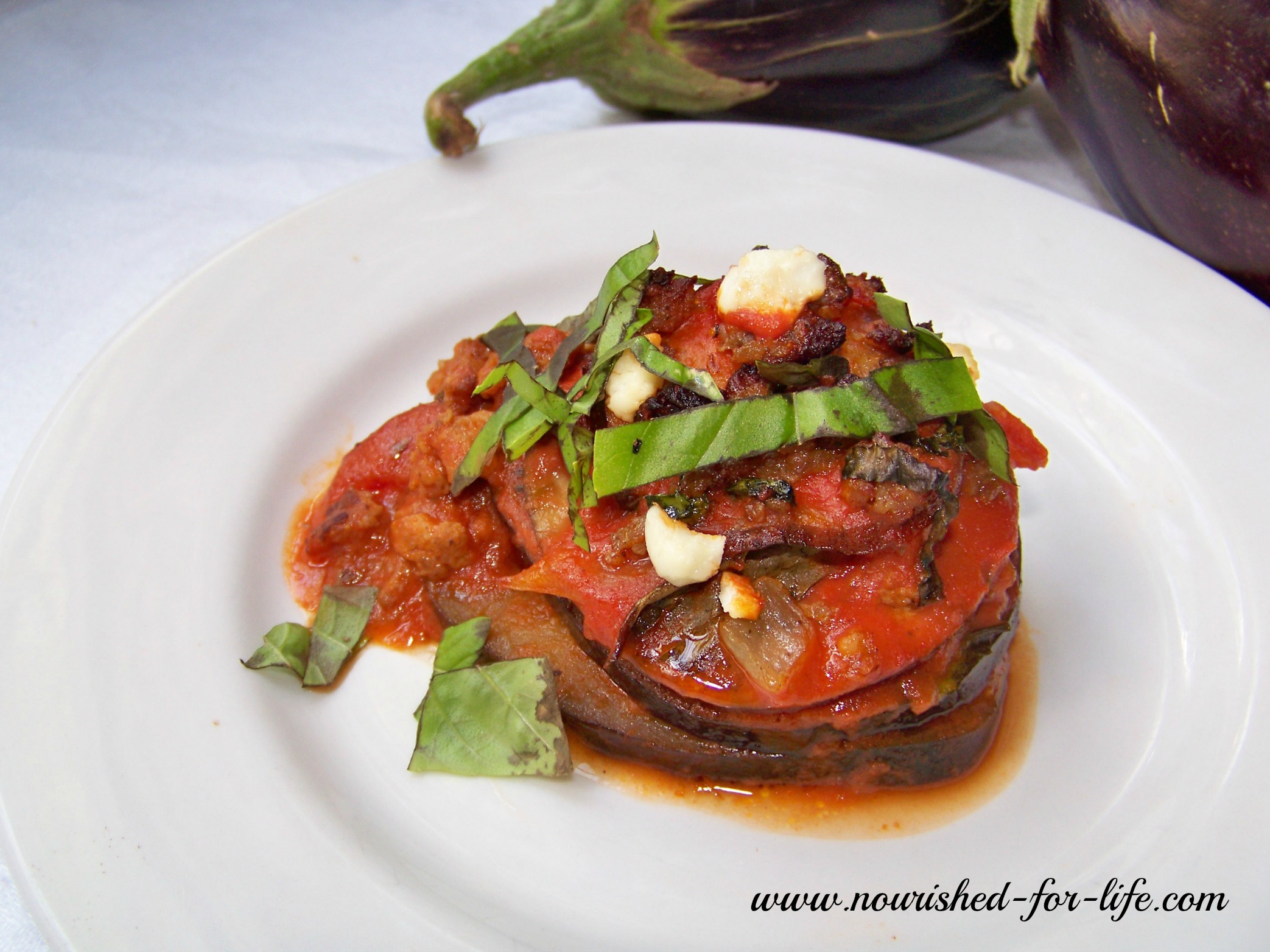
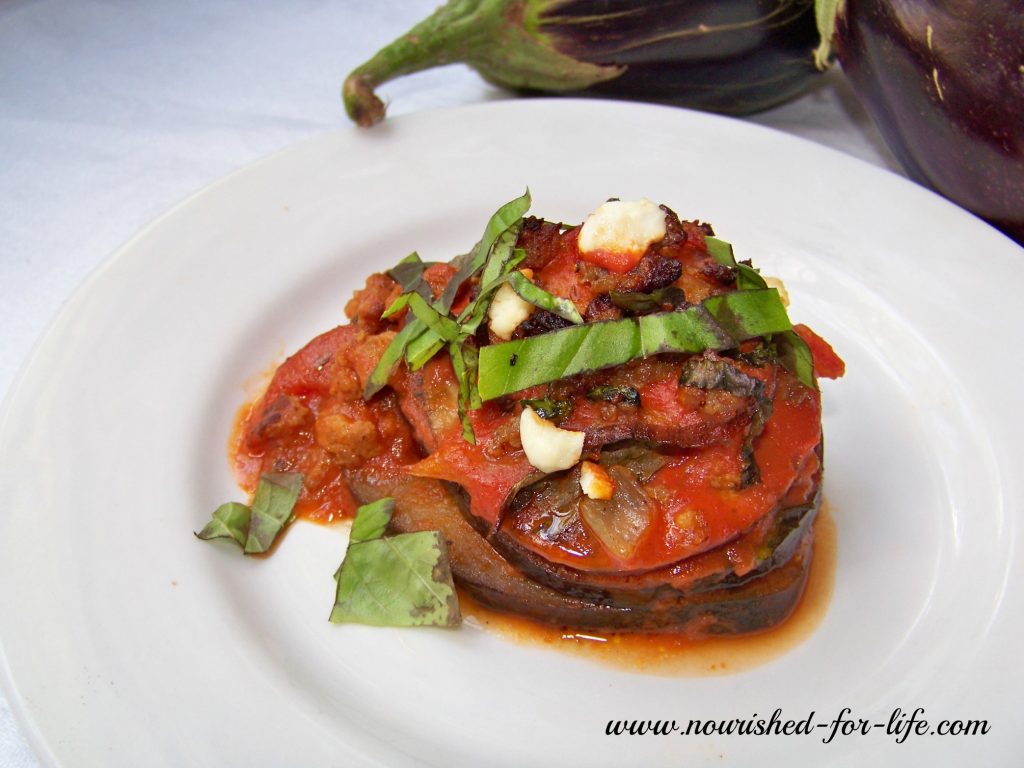
My son LOVES eggplant and every year eagerly waits for it to be in season at the farm and start appearing at the farmers market. He loves Eggplant Parmesan, and I try to make my gluten and dairy free version for him once every season. But it is so time and labor intensive I don’t usually make it more than once. This year (after his Eggplant Parmesan) we are still enjoying an abundance of eggplant and he asked for eggplant lasagna. I couldn’t find a recipe I liked that met our dietary needs (half of us are gluten and dairy free) so I made up my own and it turned out to be a hit with the whole family.

eggplant-lasagna-stacks-collage

This sauce is one of our favorite tricks for dairy free cooking. Adding coconut milk or cream to tomato sauce makes it amazingly creamy and delicious and mimics the flavor you would get from ricotta cheese in a traditional lasagna or baked Italian dish.

I added the sausage because, well, my kids will eat just about anything with sausage in it. We use the Salt and Pepper ground pork sausage from Fischer Farms. With all meat, we focus on quality and enjoy it in moderation. Fisher Farms’ sausage is hormone and antibiotic free, from pastured pigs and completely nitrate and preservative free. And it adds amazing flavor. For me, its a good trade off for my kids enjoying eggplant, kale and all of the other goodness in this dish. If you prefer a vegetarian dish, just leave out the sausage and instead, add more kale and a few cloves of fresh chopped garlic to the caramelized onion and season generously with salt and pepper. It will still be delicious!

eggplant-lasagna-stacks

I still have fresh herbs growing in pots on my patio. I highly recommend growing your own herbs! It is so easy and such a huge help in making real food delicious, easy and affordable. Fresh herbs are too expensive in the grocery, don’t last long and I don’t always plan ahead enough to know what I’ll need. But I spend $10 to $20 on herbs in April or early May and I’m still picking from them now in early October. I love that I can just run outside and grab whatever I need, whenever I need it.

eggplant-lasagna-stacks2

I also used kale from my Tower Garden in this recipe. This is something else I cannot recommend highly enough! It makes it so easy to grow my own greens, herbs and other vegetables (all year around if you invest in grow lights!) and I can pick whatever I need, anytime. I pick kale or chard for my green smoothie almost every morning. You can’t get any easier, fresher or healthier than that!  You can learn more about the Tower Garden here, or if you are local and want to see mine you are welcome any time.

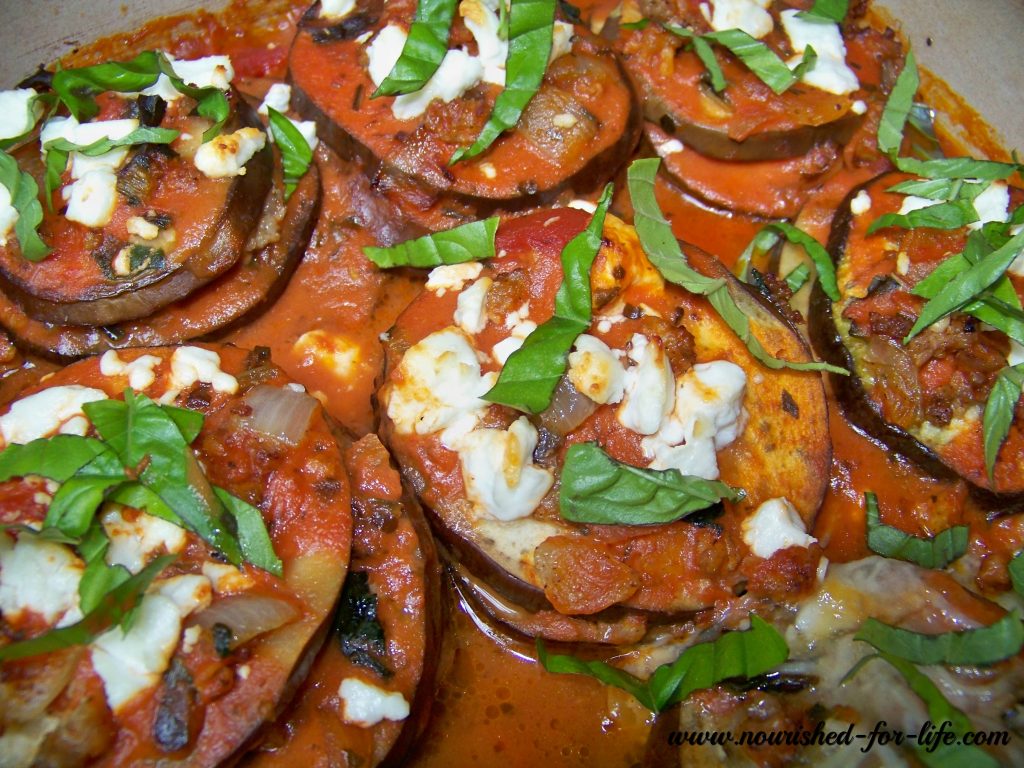
I’ve been experimenting with goat cheese for myself and my other dairy free family members. The proteins in goat cheese are much easier to digest than cow’s milk and much less inflammatory. So it is a good, more healthful alternative for some with dairy intolerance. Its totally optional here, but I sprinkled just a bit of goat cheese on half of our pan. We love it either way.

Find time to make these Eggplant Lasagna Stacks and enjoy with a big green salad!

And please comment below and let me know if you try it. I’d love to hear what you think!

Eggplant Lasagna Stacks (Gluten & Dairy Free, Paleo)

My take on eggplant lasagna is gluten and dairy free but so full of flavor and nutrition you won't miss the noodles or the cheese! (vegan/vegetarian option)    
Prep Time30 minutes
Cook Time30 minutes
Total Time1 hour

Ingredients

  • 1 c. full fat canned coconut milk
  • 1 25 oz jar pasta sauce 2-1/2 cups (I used Aldi's organic brand)
  • 3-4 medium sized fresh eggplant choose eggplant that are firm and smooth with bright shiny skin
  • 2-3 T Extra Virgin Olive Oil
  • Salt and pepper
  • 1 lb ground sausage
  • 1 onion diced
  • 5-6 kale leaves or spinach or chard
  • 20-25 Fresh basil leaves
  • Goat cheese optional

Instructions

  • Pre-heat oven to 375 degrees.
  • Trim the top stem end off of your eggplant and cut into 1/4" slices with a mandolin or sharp knife. (I recommend a good mandolin for this, as it makes it so much quicker and easier and ensures your slices are the same thickness. I have this OXO Mandolin and love it! You will need 44-48 slices. In my casserole dish, I can fit 11-12 "stacks" with 4 slices of eggplant in each stack.) Rub the eggplant slices with olive oil, lay them in a single layer on baking sheets and sprinkle with salt and pepper. Roast eggplant for about 5 minutes and then remove from oven.
  • While eggplant is roasting, combine coconut milk and pasta sauce in a small saucepan and warm it over low heat.
  • Combine onion and sausage in a skillet and cook over medium high heat until the sausage is browned and the onion is caramelized. While its cooking, chop the kale. Slice the leaves into thin ribbons and then cut up the ribbons into small bits. Add the kale to the sausage and onion mixture and stir until the kale is wilted. Remove from heat.
  • Spread a very thin layer (about 1/2 cup) of sauce in the bottom of a 9x13 pan or a comparable size casserole dish (I use a 2 qt. Pampered Chef stoneware casserole dish and can fit 11-12 stacks, depending on the size of my eggplants).
  • Choose 11-12 of the largest eggplant slices and lay them in a single layer in on top of the sauce. (You want to start with the largest slices and with each layer, use the next largest so that you end up with the smallest slices on top of your stacks.)
  • Divide the sausage mixture into four parts and use one quarter of the mixture for each layer. Place a spoonful of the sausage mixture in the center of each eggplant slice. Tear 5-6 basil leaves into pieces and sprinkle on top of the eggplant and sausage mixture. Pour 1/2 to 3/4 cup of sauce over each stack. The stacks will not be completely covered with sauce.
  • Repeat this layering two more times: Top each stack with another slice of eggplant (using the largest slices of eggplant first) then top with the sausage mixture, torn basil leaves and 1/2 c. of sauce. Reserve 5-6 basil leaves to add as a garnish, just before serving.
  • After the fourth and final layer of eggplant, spoon the remaining sauce over the stacks. Then top with the last portion of the sausage mixture, spooning some on top of each stack.
  • Top with crumbled goat cheese, if desired.
  • Cover the casserole dish with foil and bake at 375 for 30 minutes. Alternatively the dish can be refrigerated at this point and put back in the over before you're ready to serve.
  • Stack the remaining basil leaves and slice them into a thin julienne. When your Eggplant Lasagna Stacks are done, sprinkle them with fresh basil just before serving.
  • Enjoy!!

Notes

For a vegan/vegetarian option, simply omit the sausage and instead, to the caramelized onion add 12-15 leaves finely chopped kale, 3 cloves minced garlic and salt and pepper. Layer as instructed above.

Garlicky Roasted Sweet Potatoes

One of our favorite places is our local CSA, Seton Harvest, otherwise known as “the farm”. Of course we get amazing, locally grown, chemical free produce, usually harvested the day we pick it up. But its more than that. Going to the farm to pick up our weekly share, we get to escape our normal routine and stresses and breathe in the fresh country air; visit with friends; pet the dogs; feed the chickens; pick strawberries, fresh herbs, arugula, sungold tomatoes or whatever is in season and available for u-pick; hunt for caterpillars; chase butterflies; climb piles of mulch and make mazes out of bales of hale (yes that was us, sorry Joe and Julie!)

My big kids have practically grown up at the farm and it makes me so happy to see my youngest experiencing her first year running around the farm and loving it just as much as the rest of us do. Perhaps most of all, I LOVE that my kids know who grows their food and where it comes from (not just the supermarket!) and that they love things like eggplant and eagerly ask Farmer Joe when it will be in season and that they love to pick greens like arugula and sorrell and eat them on the drive home.

Garlicky Roasted Sweet Potatoes

One of our favorite places is our local CSA, Seton Harvest, otherwise known as “the farm”. Of course we get amazing, locally grown, chemical free produce, usually harvested the day we pick it up. But its more than that. Going to the farm to pick up our weekly share, we get to escape our normal routine and stresses and breathe in the fresh country air; visit with friends; pet the dogs; feed the chickens; pick strawberries, fresh herbs, arugula, sungold tomatoes or whatever is in season and available for u-pick; hunt for caterpillars; chase butterflies; climb piles of mulch and make mazes out of bales of hale (yes that was us, sorry Joe and Julie!)

My big kids have practically grown up at the farm and it makes me so happy to see my youngest experiencing her first year running around the farm and loving it just as much as the rest of us do. Perhaps most of all, I LOVE that my kids know who grows their food and where it comes from (not just the supermarket!) and that they love things like eggplant and eagerly ask Farmer Joe when it will be in season and that they love to pick greens like arugula and sorell and eat them on the drive home.

One of our favorite events at the farm is the annual sweet potato harvest, when we enjoy a beautiful fall evening of fellowship and digging sweet potatoes. Sadly, kid schedules haven’t allowed us to participate the last couple of years, so these pictures are a few years old, but we have been enjoying the labors of our fellow shareholders this week. When was the last time you dug up a sweet potato and then took it home and roasted it with fresh garlic (also fresh from the farm)? If you haven’t been so lucky, put it on your bucket list and find a time and place to experience this!

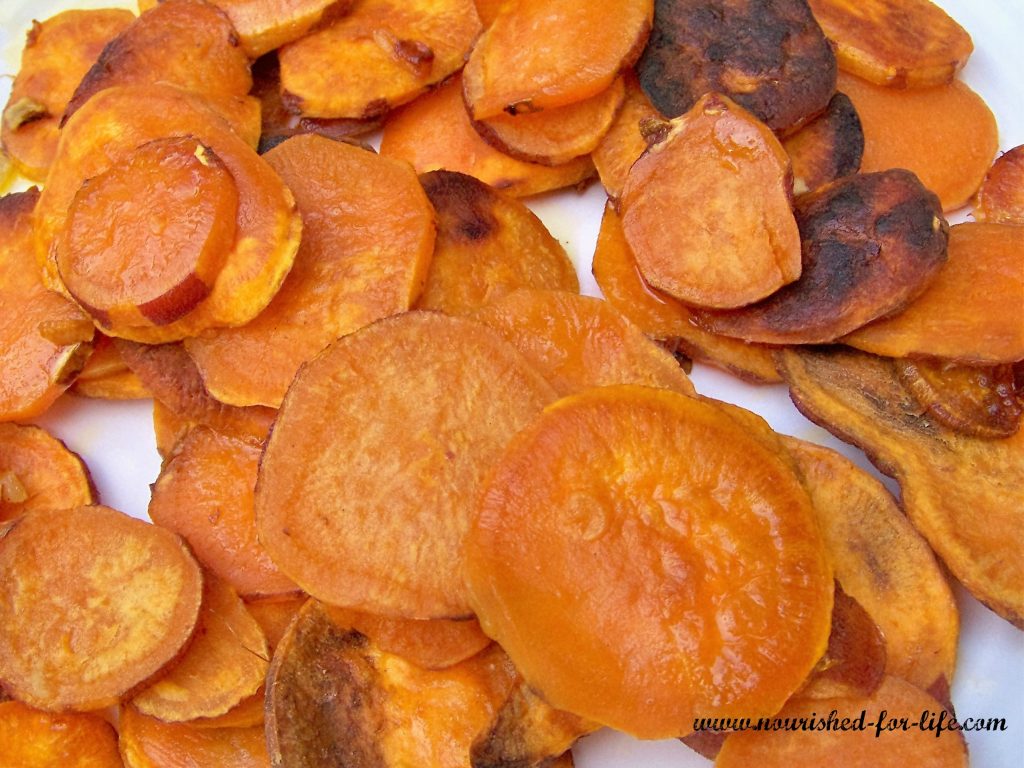
Even if you can’t harvest your own sweet potatoes, you can still make these sweet potatoes! This recipe is very loosely based on a recipe I found in Victoria magazine many years ago. I can’t tell you what issue or who the original author was but I do know it was a Thanksgiving recipe and it had crispy sage leaves on top. We’ve kept it simple, just sweet potatoes and fresh garlic, maybe a pinch of sea salt at the end if you think you need it. That’s it. And they are so good.

Garlicky Roasted Sweet Potatoes

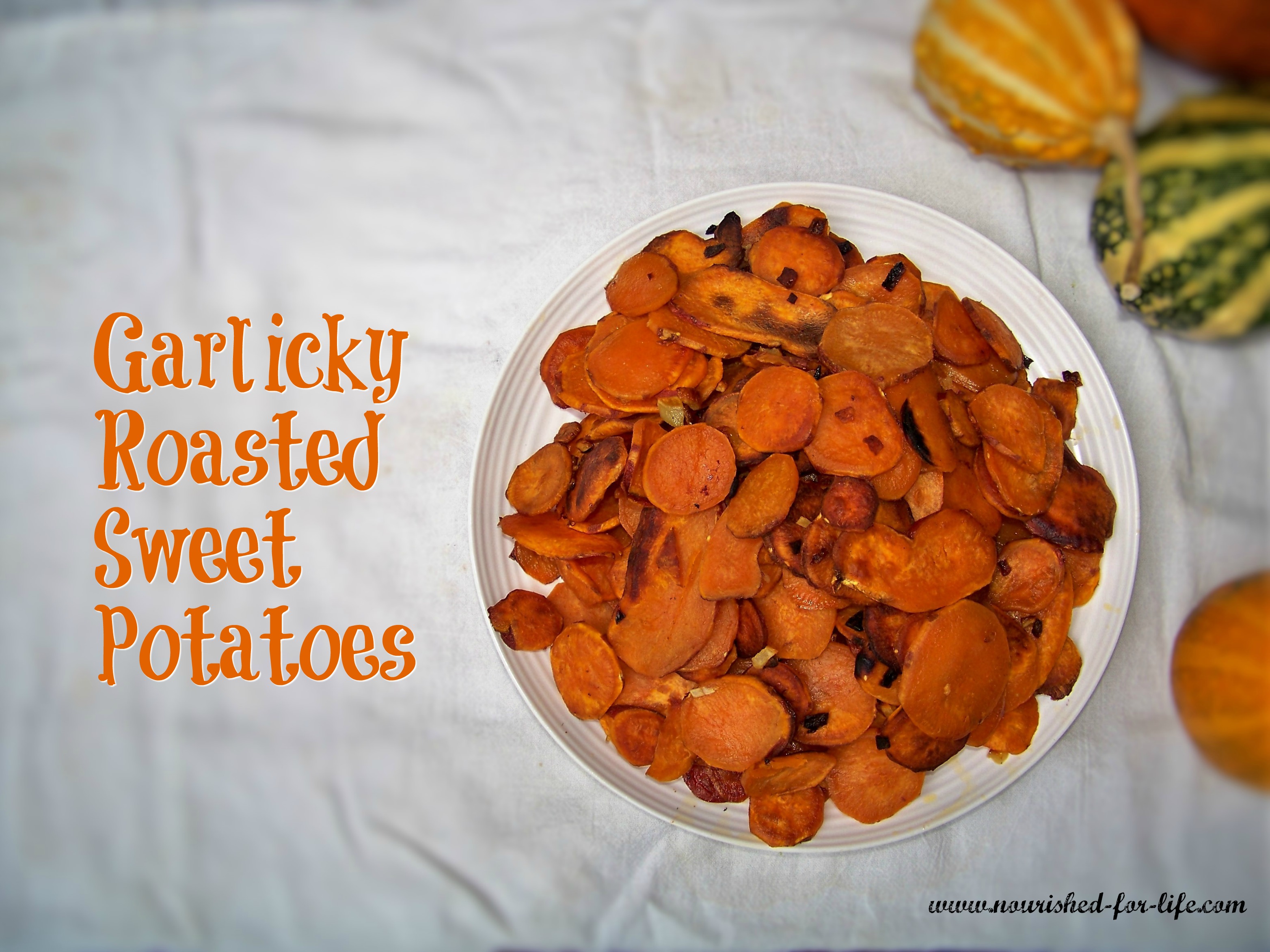
Whether you need a new sweet potato recipe for your Thanksgiving dinner or just a nutrient dense side dish for the next time you grill  — these will hit the spot. In a pinch, you can make them without the marinating time, but that is truly the secret to this recipe. Skip it and you will have perfectly fine roasted sweet potatoes. Plan ahead a bit and you will be rewarded with amazingly delicious, crispy potatoes infused with garlicky goodness.

One quick equipment note:  I highly recommend a good mandoline for this recipe and any others involving sliced vegetables. It makes quick work of the sweet potatoes here, and ensures that they are all the same thickness so they cook evenly and at the same speed. I have this OXO Mandoline and love it!

Garlicky Roasted Sweet Potatoes

These sweet potatoes are marinated in garlic and extra virgin olive oil and roasted to crispy golden perfection. So simple and yet so delicious!
Prep Time2 hours 15 minutes
Cook Time30 minutes
Total Time2 hours 45 minutes

Ingredients

Instructions

  • Peel and slice the sweet potatoes into 1/4 inch thick slices. Use a mandoline to make this much easier and ensure your slices will be the same size and cook evenly.
  • Mince the garlic.
  • Put the sliced potatoes and garlic in a gallon size zip lock freezer bag. Add the olive oil. Zip the bag and then turn and massage the bag until the garlic and olive oil is distributed well. You want every slice of potato to be well coated, with some oil accumulating in the bottom of the bag. Lay the bag on one side and let it sit on the counter for at least 2 hours or in the refrigerator up to 24 hours. Turn the bag over a few times. This allows the olive oil to become infused with garlic flavor and gives the potatoes plenty of time to marinate in the garlic infused olive oil. The longer they marinate, the more flavor you will have.  
  • Preheat oven to 400 degrees. 
  • Remove the potato slices from the bag and lay evenly in a single layer on 2 or 3 baking sheets. The slices can overlap a bit, but you don't want to pile them up or the potatoes will steam, rather than roast, and will be mushy not crispy. 
  • Roast for about 30 minutes, rotating the pans from top to bottom of your oven part way through. At 20 minutes, start checking the potatoes. There is a very fine line between crispy potatoes and burnt potatoes. We like ours just this side of burnt. So it may seem a bit fussy, but I check them, remove any slices that are dark enough, and then put the pans back into the oven, checking every 2-3 minutes and repeating this procedure until they are all done perfectly. If you prefer not to fuss over your potatoes this much, just take them out when the first few are browned but not yet burned and the others are just beginning to turn golden brown around the edges or on the underside when you flip one over. They will be delicious either way! 

Cousin Claudio’s Authentic Italian Pasta Sauce

sauce

It’s beginning to feel like fall here, which is putting me in the mood for soups, stews and heartier pasta dishes that I don’t usually make in the summer. So today seemed like a good day to share one of our favorites.  I know this isn’t my usual heavy-on-the-fruits-and-vegetables kind of recipe but, while we don’t eat pasta every day, we do love it and this dish is nourishing to the soul as well as the body.

Nick’s Cousin Claudio is a chef in Italy. When we got married there in 2004, one of the incredibly special things about our trip was meeting some of our Italian relatives. We were married in Ripa Teatina, a tiny hilltop town overlooking the Adriatic, in the church where Nick’s great-grandparents were married before they emigrated to the United States, and where some of his cousins still live.

A few days before our wedding, family members we had never met welcomed us into their home for a meal and Claudio cooked pasta for us. This pasta. We didn’t get his recipe, but he gave us basic instructions and when we got home I experimented and made it over and over until we felt like we had finally achieved it. Of course, we call it Cousin Claudio’s Sauce.

(This picture is in front of the little grocery store the family runs.)

One day last year on a hectic school and soccer night, I gave the kids pasta with jarred sauce (which for the record, we do eat). On that night though, my daughter declined to eat her dinner, and when I inquired as to why she wasn’t eating she said sweetly, “Mommy, I just really prefer Cousin Claudio’s Sauce.” Don’t we all, my dear. I’m still not sure whether I should have felt pleased or embarrassed or annoyed. I may have created a monster. I’ve definitely raised a foodie.

Those of you who know us well have probably had Cousin Claudio’s Sauce, as it is one of our favorite meals to share with family and friends. And to this day it takes me back to that simple but incredible meal in a beautiful place with very special people. We are still overwhelmed by and so thankful for their warmth and hospitality.

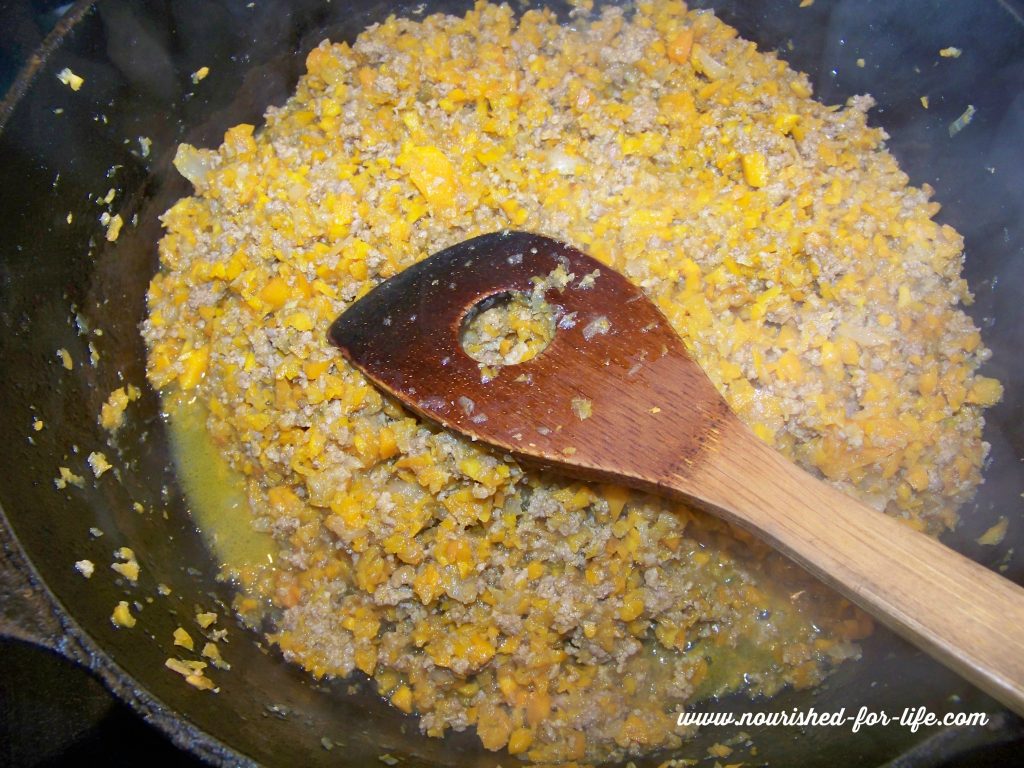
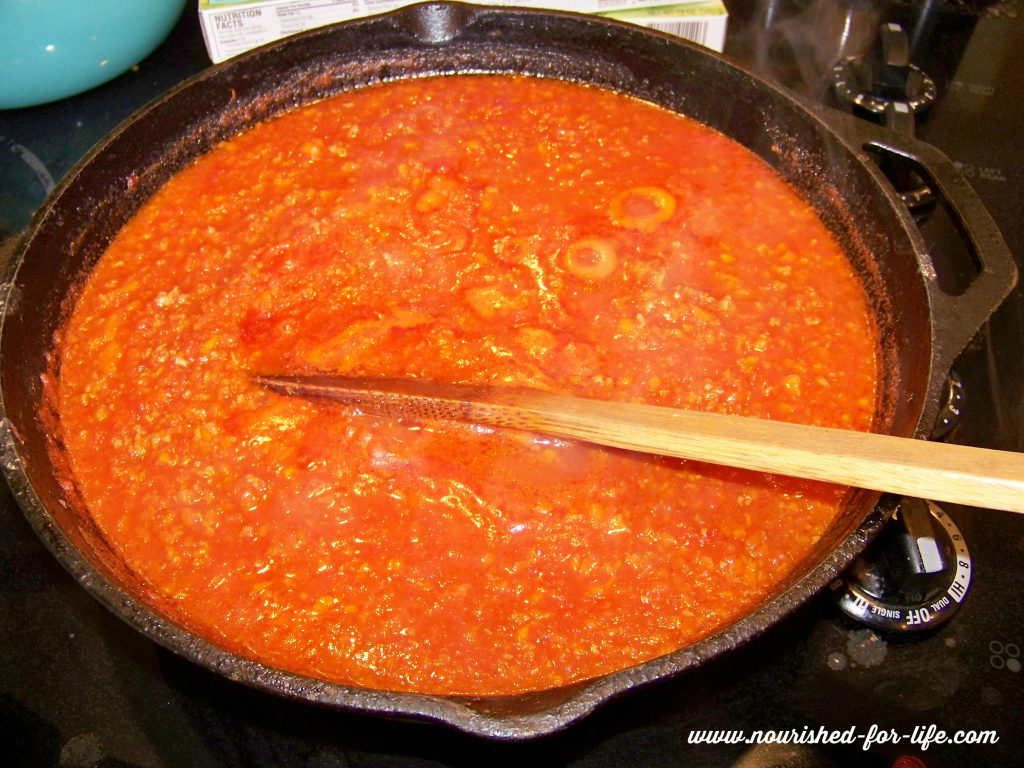
This sauce is so simple but it is really important not to rush it. Take your time and allow the flavors to develop at each step. The carrots and onions basically melt into the sauce and you will have to look closely to even know they are there. Use a flat or angled wooden spoon and break the meat up into really tiny bits as it cooks. Allow the onions, carrots and meat to all three to simmer together, and then give the wine plenty of time to cook down. If you prefer not to use wine, you can substitute an equal amount of chicken or vegetable broth with lemon juice. You just need the acidity to brighten the flavors. Finishing the sauce with butter adds just the right bit of creaminess, flavor and mouth feel to the sauce. A drizzle of olive oil or ghee and a tiny pinch of salt is a good dairy free substitute.

Authentic Italian Pasta Sauce

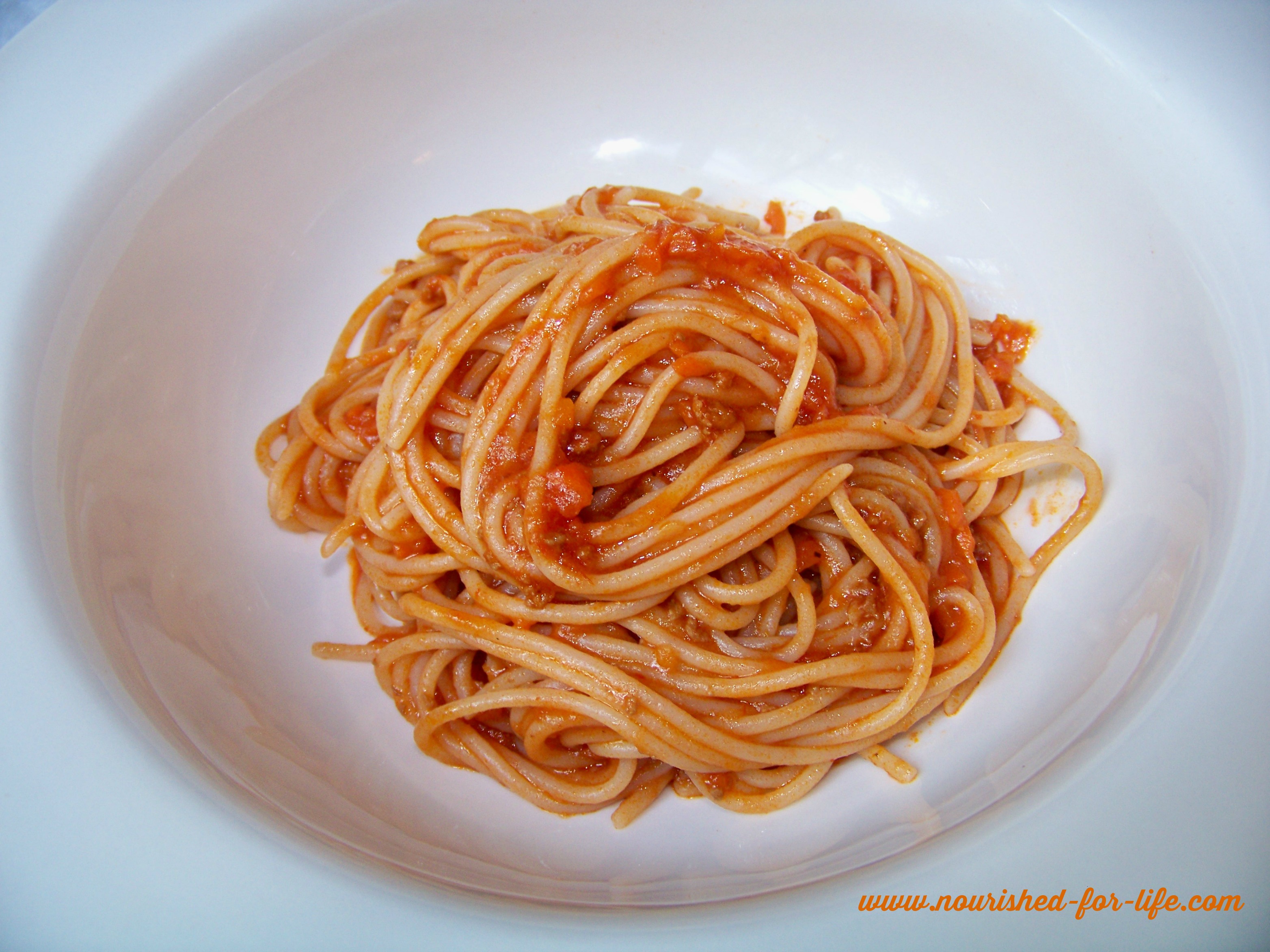
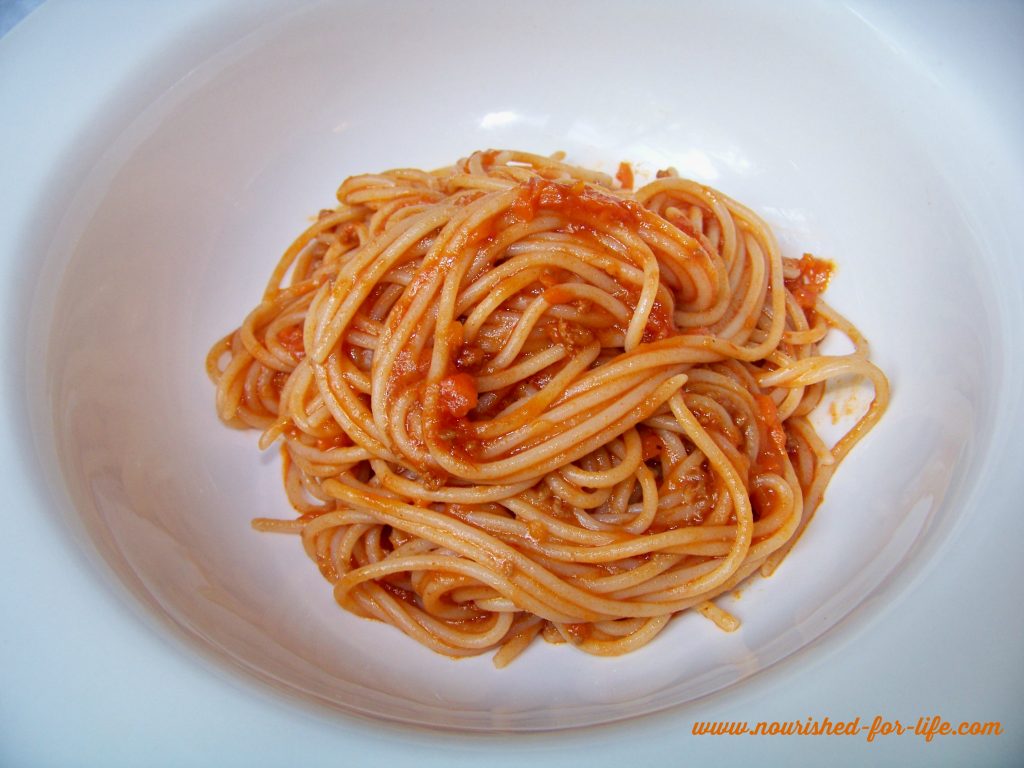
This sauce is best served with linguine. It won’t be the same with a shorter pasta shape or capelinni. We used to love DeCecco brand linguine, which is made in Chieti, Italy, very near where we were married and first had this sauce. Now that we are gluten free, the only pasta that measures up for us is Jovial, which is a whole grain brown rice pasta made in Tuscany with traditional methods. Now I use Jovial’s Organic Brown Rice Spaghetti for this sauce now (until they start making linguine!) and it is delicious. Even if you aren’t gluten free, I highly recommend it as a healthier, whole grain option. You can’t even tell the difference. And we’re pretty picky about our pasta!

Authentic Italian Pasta Sauce

I’m feeding a family of six and I love to get 2 meals from anything that takes a bit of time to prepare. So this recipe will sauce 4, 12 oz. boxes of Jovial spaghetti. It can easily be cut in half, if you aren’t feeding a small hungry army like I am.

A few other important tips to make this a truly authenitc Italian pasta experience:

1. Salt your pasta cooking water liberally to season the pasta. Do not add oil to your cooking water. This prevents the pasta from absorbing the sauce.

2. Cook your pasta to almost but not quite al dente, the point where it still has just a bit of bite. This usually means undercooking it by two or three minutes from the package directions so check it often towards the end of the cooking time.

3. Do NOT rinse your cooked pasta. Drain the pasta in a colander and then put it straight into your warm sauce. Toss it well with a pair of tongs and let it sit in the sauce on very low heat for just a few minutes. This allows the pasta to absorb all of the flavors of the sauce while it finishes cooking.

4.Italians do not over-sauce their pasta. The sauce is a delicious condiment to showcase the pasta. So after you let your pasta sit in the sauce for a few minutes, pull it out, put it in a serving bowl, top it with just a bit more sauce if you feel like you need to and then save the remaining sauce for another meal.

Authentic Italian Pasta

I hope you love Cousin Claudio’s Sauce as much as we do. And I hope Claudio will think we are doing his sauce (and his name) justice.

Serve with an arugula salad and enjoy with your loved ones!

Print Recipe
5 from 1 vote

Cousin Claudio’s Authentic Italian Pasta Sauce

Ingredients

  • 2 T extra virgin olive oil
  • 1 sweet onion finely minced
  • 8-10 large full size carrots, finely minced (approx. 3 cups, minced)
  • 1 lb ground beef please use organic, grass fed beef if possible
  • 1 c. Dry white wine can substitute 2/3 c broth with juice of one lemon
  • 2, 28 oz cans crushed or puréed tomatoes
  • 2-4 cups water
  • 2 T butter optional (use olive oil, coconut oil or ghee with a tiny pinch of salt ffor a dairy free version)
  • 2, 12 oz boxes
  • Jovial Organic Brown Rice Spaghetti
  • Parmigiano reggiano for serving optional

Instructions

  • Coat a large skillet or cast iron pant with the olive oil and warm over medium heat.
  • Place carrots In a food processor and pulse until they are minced finely, but not puréed, then add to your skillet. Repeat with the onions.
  • Cook the carrots and onions over medium heat, stirring often, until they are softened but,not yet starting to brown or caramelize.
  • Move the carrots and onions to one side of the skillet and add the ground beef in the open space. Use a flat or angled wooden or bamboo spoon and break the meat up into really tiny bits as it cooks. When the beef is browned, stir it into the vegetables. Allow the onions, carrots and meat to all three to simmer together until the meat is cooked through and any liquid has evaporated.
  • Add the white wine or broth and cook, stirring often, until the liquid is mostly absorbed.
  • Add the tomatoes and stir to combine. Add one cup of water. Bring to a boil and then reduce to a simmer. Allow the sauce to simmer for at least 2 hours, stirring often, scraping down the sides of your skillet and incorporating the bits of sauce from the edges of the pan. Add water, 1 cup at a time, as needed to keep the sauce the same consistency. The color will deepen and turn more orange as it cooks. The longer you allow the sauce to simmer, the deeper the flavor will be. Just keep adding a bit more water as it cooks down.
  • Just before serving, stir in 2 T butter or one of the dairy free alternatives.
  • Bring 6-8 quarts of water to a boil in a large stock pot. When the water has come to a boil, add approx 1 T sea salt to the water. Do not add any oil. Cook the pasta according to your package instructions, but check it a few minutes early and remove it from the water just before it is al dente.
  • Drain pasta in a colander and add it to your sauce. Use tongs to combine the pasta and sauce, making sure all of the pasta is coated. Let it sit over low heat for just a few minutes to allow the pasta to absorb all of the flavors from the sauce as it finishes cooking. Use your tongs to lift the pasta out of the sauce and into a serving bowl. You should have half of the sauce remaining, set it aside for another meal.
  • Serve with grated parmigiano reggiano, if you wish, and enjoy with your loved ones!

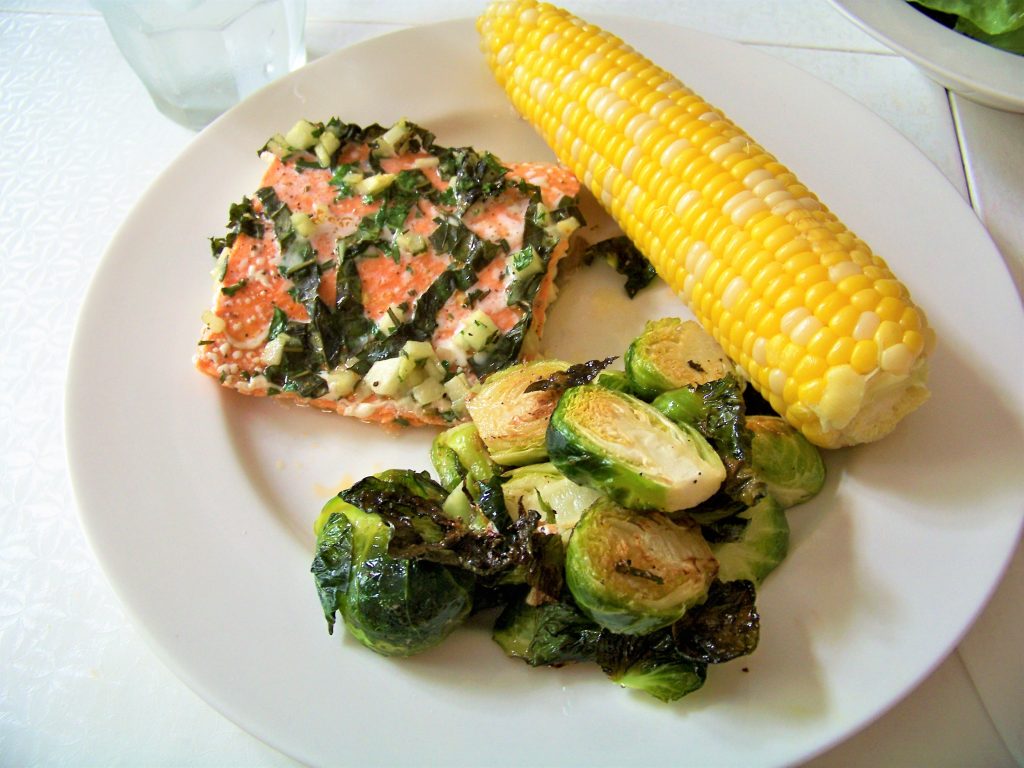
Garlic & Herb Wild Salmon with Roasted Brussels Sprouts

Wild Salmon

By now we all know how important omega-3 essential fatty acids are to our health. There are two essential fatty acids (essential meaning we have to get them from our diet): omega-3s and omega-6s. We should consume a diet with a 1:1 ratio of omega-6 EFAs to omega-3s. The Standard American Diet has a ratio of 12:1. We are eating far too many omega 6s (primarily from processed vegetable oils and processed foods containing them) and far too few omega-3s.

Too many omega-6s promote inflammation, and inflammation is the root of many diseases. A balance of omega 3s to omega 6s is absolutely vital for brain health, vision, joint health, cardiovascular health, digestive health and so much more. Trading pro-inflammatory foods for healing foods high in Omega-3s will have a huge impact on your health!

Garlic & Herb Wild Salmon with Roasted Brussels Sprouts

Wild salmon is one of the best sources of omega-3 EFAs. The International Society for the Study of Fatty Acids and Lipids and the US National Institutes of Health both recommend at least 600 milligrams of omega-3s per day. According to Dr. William Sears, a renowned pediatrician, author and nutrition expert, eating 6 oz of wild salmon twice/week would give you the equivalent of this. (Sears, MD, William and Martha, Prime Time Health: A Scientifically Proven Plan for Feeling Young and Living Longer, p. 192-93.).

The health benefits of salmon are so great, even if it’s not your favorite it’s worth the effort to acquire a taste for it. When I was pregnant with my trio and on bedrest, sweet friends brought us dinner and asked if I’d rather have chicken or salmon. I answered chicken–I liked some fish but never really cared for salmon. If only I’d known then how much my babies and I all 4 needed that salmon! The year they turned two, I made a New Years resolution to cook fish once a week. One of my boys liked tuna and any white fish but always found salmon too fishy. For several years I kept making salmon and always made him eat 2 small bites, until one day out of the blue (maybe when I first made this recipe!) he suddenly decided he liked it.

Major mom victory! Persistence pays off!!

Roasted Brussels Sprouts

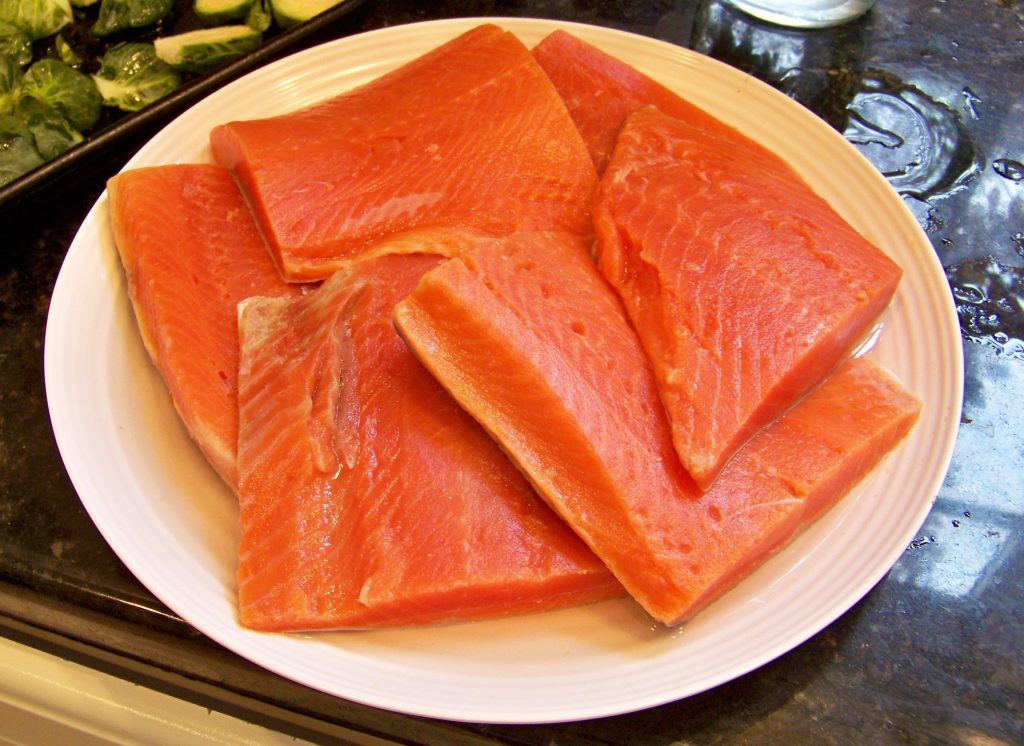
If you’re going to go to the trouble of eating salmon, make sure you’re buying wild salmon, not farmed. Even though it’s more expensive, it’s well worth it. Farmed salmon is much lower in omega-3s because the fish isn’t eating its natural diet of sea plants and creatures such as shrimp and krill. Farmed salmon is usually raised with antibiotics in its feed just like commercially raised land animals. And farmed salmon is almost always fed artificial coloring to try to mimic the rich orange color of wild caught salmon. The color of wild salmon comes from two potent anti-oxidants found in its natural diet: astaxanthin and canthaxanthin. Synthetic, petrochemical versions of these anti-oxidants, used to artificially color the salmon’s flesh, has turned into a big and lucrative business. Maybe someday I’ll write a post about all of the concerns with the salmon industry. For now, just know farmed salmon is giving you few health benefits and some harmful things as well. Stick with wild caught Alaskan salmon.

Garlic & Herb Wild Salmon with Roasted Brussels Sprouts

This is my family’s favorite salmon recipe. I get complaints if I try anything new (and I’m so thrilled that all of my kiddos love salmon that I rarely try anything new on them anymore!) It’s quick, really simple, can be prepared ahead of time and bakes in 20-25 minutes. All things I love in a meal. I love it with fresh herbs in the summer when my patio pots are overflowing, but it’s still very good with a generous rubbing of dried herbs, when you don’t have fresh on hand.

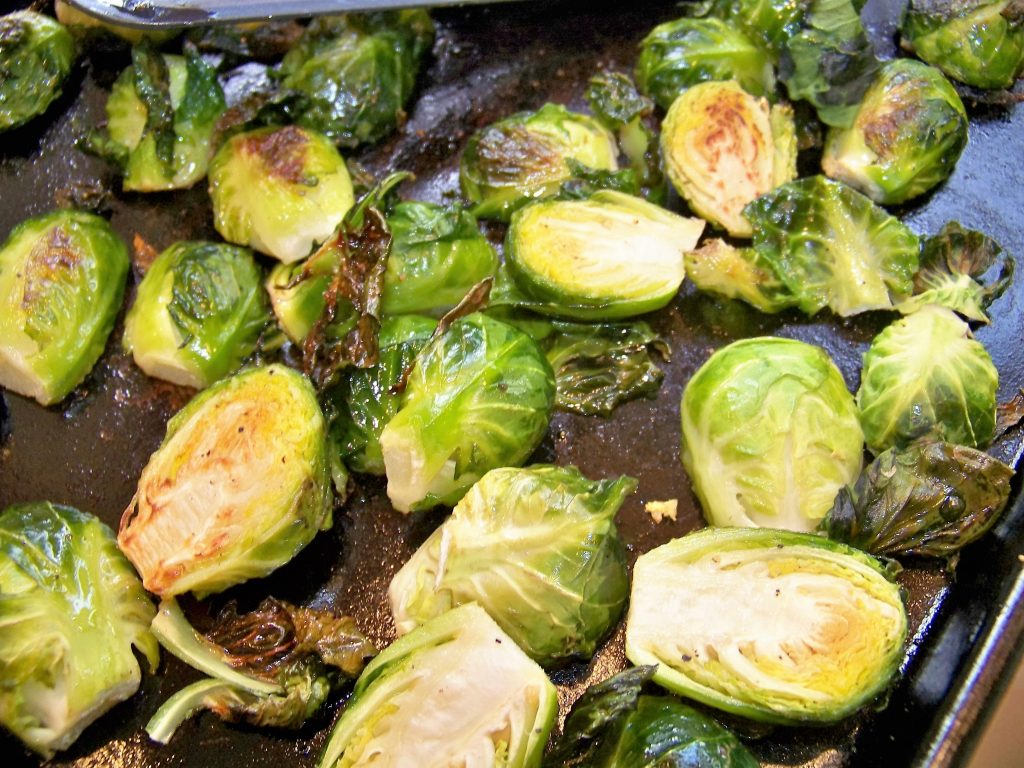
Roasted Brussels sprouts are one of our favorite veggies too, but this method is delicious with almost any vegetable (broccoli, cauliflower, asparagus, green beans, summer squash, sweet bell peppers …). It’s a great way to introduce new vegetables to resistant family members. Toss just about any vegetable with coconut, avocado or extra virgin olive oil and a generous sprinkling of sea salt. Add black pepper, garlic powder or dried herbs if you like. Roast til they’re starting to brown and are just al dente. All six of my clan will polish roasted vegetables off without any complaints. Or at least no complaints from the husband and daughters and minimal complaints from the boys, if I let them have ketchup. I still consider that a win!

Garlic and Herb Wild Salmon with Roasted Brussels Sprouts

Ingredients

Garlic and Herb Wild Salmon

  • 2 lbs. Wild Alaskan salmon thawed, if using frozen
  • Sea salt and fresh ground pepper to taste (I use
  • Celtic Sea Salt
  • or
  • Redmond Real Sea Salt
  • )
  • 1/2 c. Extra Virgin Olive Oil (I use
  • California Olive Ranch
  • )
  • 2 Large or 4 small cloves of fresh garlic minced
  • 1/2 c. Fresh herbs such as basil parsley and rosemary, chopped

Roasted Brussels Sprouts

  • 1 lb. Brussels sprouts rinsed and cut in half
  • Extra virgin olive oil
  • Sea salt
  • to taste

Instructions

For the salmon

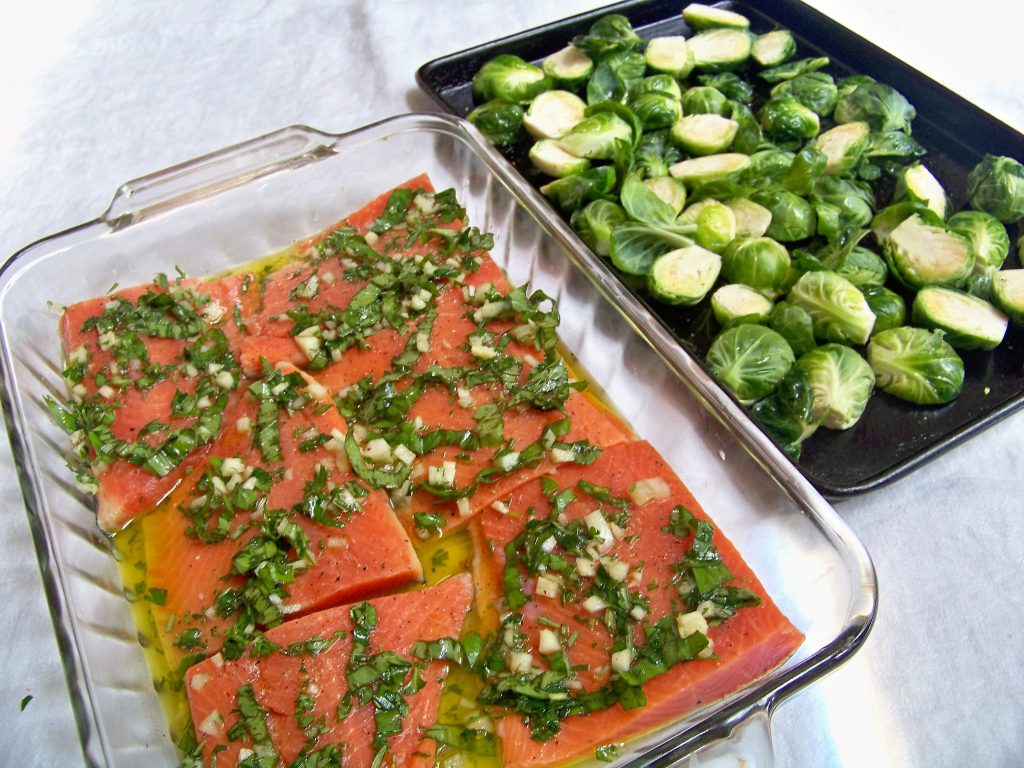
  • Pre-heat oven to 335 degrees. Lay thawed salmon fillets skin side down in a glass casserole dish or a baking pan pan. Sprinkle with a few generous pinches of sea salt and a small pinch of black pepper.
  • In a small bowl mix the olive oil, minced garlic and chopped herbs. Rub mixture evenly over the salmon fillets. The dish can be made up to this point and refrigerated until you're ready to bake.
  • If you've refrigerated the fish, let it come to room temperature before baking, Bake at 325 for 20-25 minutes, until the fish is tender and flakes easily with a fork.

For the Brussels Sprouts

  • Rinse your sprouts in a colander and cut them in half, unless they are already very small. Toss with extra virgin olive oil and sea salt. Feel free to add garlic powder or other herbs if you like. Roast at 335 degrees, while the fish is cooking, 20-25 minutes or until the sprouts are starting to turn golden brown and are tender, but not too soft, when pricked with a fork.
  • Enjoy!

Tuscan White Bean and Tuna Salad

Twelve years ago my husband and I got married in an 800 year old church overlooking the Adriatic, in a tiny hilltop town in Italy. The same church his great-grandparents were married in before they emigrated to the US. After a beautiful wedding day, we spent a week near Lucca, in Tuscany. Nearly every evening we ate dinner at a little wood fired pizza shop just down the mountain from our cottage. We still reminisce about our favorite “rucola e prosciutto” pizza, the simple fresh salads and the kind owner/pizza chef who came out from the kitchen every night to check on us and bring us gifts of biscotti, espresso and Lemoncello.

image

This was the beginning of my love affair with food. Italians are experts at taking the highest quality, fresh, healthy ingredients and preparing them with love and a simplicity that lets their natural flavors shine. The results are incredible in both their simplicity and deliciousness. (In my world, food must be healthy AND delicious!)

The closest we have come to repeating this authentic Italian experience here in the US is at our favorite Italian trattoria and pizzeria in Pittsburgh, PA called Il Piccolo Forno. This Tuscan White Bean and Tuna Salad was my attempt to recreate the flavors of an amazing salad we enjoyed there. A perfect combination of simple, fresh, healthy ingredients that made up a perfect summer salad.

image

This salad is delicious served on its own as a healthy lunch or a light dinner. Two of my four littles prefer it plain as pictured above or with some whole grain crackers. Nick has been known to turn it into a sandwich. But we really love it on a bed of mixed greens. Drizzle with a bit more extra virgin olive oil and an authentic, high quality balsamic vinegar and sprinkle with a few shaves of parmigiano reggiano and you’ll feel like you’re sitting at a trattoria in Tuscany.

Tuscan White Bean and Tuna Salad

Ingredients

  • 3 c. cooked Cannellini or Great Northern beans or 2 15.5 oz cans, drained and rinsed
  • 2 cans tuna fish (I like
  • Genova yellowfin tuna in olive oil
  • )
  • 1 shallot minced
  • 1/2 c. Flat leaf Italian parsley chopped
  • 1/3 c. Extra virgin olive oil (I use
  • California Olive Ranch
  • )
  • 1/4 c. Red wine vinegar
  • Mixed greens balsamic vinegar and parmigiano reggiano, optional for serving

Instructions

  • In a bowl, combine beans, tuna, shallot and parsley. Add olive oil and red wine vinegar and stir to combine. Ideally, if you can wait, let the salad sit in the refrigerator for a few hours or overnight to allow the flavors to meld.
    Serve alone or over a bed of mixed greens and drizzle with a high quality balsamic vinegar and shaved parmigiano reggiano.